Between the Devil and the Deep Blue Sea*

I am like a woman who keeps being lured towards the mad, bad lover, while a perfectly nice guy is standing around, available.  I have always been fiercely judgmental of women like that.  Why don’t they think with their brain instead of their heart? I have always asked.  And here I am, torn between two cities, vacillating between the gentle kindness of Norwich and the ruthless excitement of London.

When I tell people in Norwich that I am frantically looking for a job, they receive my need as a personal plea.  They stop, listen, ponder and give advice.  More often than not, they also give me a lead.  An e-mail address, a ‘phone number, someone’s name.  Here, there is none of the frequent “Hmm”, “Err” or “Ahh” and fleeting “I wish I could help” of my Londoners, before they slip back into their own rushed lives.

Here, I met and talked to a man – a musician – who said, “What can I tell people about you, to help you get a job?”

Here, in four weeks, not one person has asked me “what’s your accent?” and that makes me feel accepted for what I am.  Here, I am not a misfit or a fool.  Though what I am, I do not yet know.

There is an aura of contentedness around the city.  It is I who am not yet content.  What do I miss most? – How can I admit this without appearing stupid, or spoilt, or shockingly superficial? – I miss hearing and speaking other languages.  I have spoken almost nothing but English here.  Two weeks ago, after the new Pope was elected, my friend A. Skyped me from Rome.  Hearing her speak Italian was like listening to Vivaldi when one is tired and sad.  Speaking Italian to her was like savouring delectable sweetmeats.  I drank and ate every word with voracity.  I feel as though I have been eating the same dish for a month, and the dish lacks salt.

Someone I met on my street told me of a café where people meet once a week to speak other languages.  I rushed there like a thirsty traveller who has been given directions to a fountain.  A group of very friendly, smiling people having coffee around a large wooden table.  They greeted me with spontaneous warmth.  Within seconds, something jarred.  Something in the body language; in the topics of conversation.  Then I realised what it was.  They were not native speakers of the languages they spoke so fluently.  They were all British.  Once again, I felt that lack of salt in my food.  Once again, I wanted to kick myself for caring about something so insignificant, when I had before me such kind, accepting people.  People who are willing to help me.

I remember spending a week in Abruzzo, once, where I spoke nothing but Italian.  At the end of the week, I began speaking to myself in English and French, to stop myself going mad.  I would feel the same in any other prevalently monolingual place.

The blood of three nations runs in my veins.  I first saw daylight in a fourth, and entered adolescence in a fifth.  From childhood, I was fed on four languages, and taught to think in four different ways.  I cuddle animals in Russian, argue in Italian, reason in French and write in English.  I am like the patterned costume of Arlecchino.  I need all my hues around me.  I need to inhale more than one colour to be able to breathe.  How can someone made up of bits learn to live in a whole?

Norwich is what you make of it – I hear almost every day – but you need to give it time.  Time.  How much time? And how much money?

My American adoptive aunt always says, “You can have anything you want in life.  You just can’t have everything.”  At my age, and with my (lack of) prospects, I cannot afford the luxury of even so much as looking at the moon – let alone wishing it had a fence around it.

I guess, when all it said and done, it all comes down to which man shows he means business, and offers an engagement ring.  In my case, my fate depends on which city will offer me a job.  To the city that gives me that, I shall be true.

In the meantime, I wish I could tear out my brainless heart, and think with my head.

*http://www.youtube.com/watch?v=vHkikZ3fcdw

Scribe Doll

Posted in Travel | Tagged , , , , | 20 Comments

Poverty, Yes – But St Francis Also Loved Animals

Although I am not a Catholic, I was overwhelmed when, last Wednesday afternoon, a friend texted me the words, “New Pope elected!”  Immediately, I went onto the Italian Radio and Television website, and remained glued to it for several hours.  The excitement of the crowd in Piazza San Pietro was palpable – and contagious – even through the 13 inch screen of my laptop.  Let us admit it.  The Anglican Church may have – in my opinion – some of the best choral singing around, but few can produce a sense of solemnity or a lavish historical occasion like the Vatican.  I was born in Rome and I have always taken the splendour and ornate architecture of the city somewhat for granted.  However, now that I have spent nearly three decades in more, shall we say austere surroundings, there are times when the sight of the Baroque Cupola – only ever centred on manufactured-for-gullible-tourists souvenirs – and the perfect anatomy of the marble bodies that preside over magnificent fountains, bring on a sense of longing for a less Puritan lifestyle.

I wanted to cheer and jump around the room, when Cardinal Jean-Louis Tauran emerged at the window and announced, “Habemus Papam: Eminentissimum ac Reverendissimum Dominum, Dominum Georgium Marium Sanctae Romanae Ecclesiae Cardinalem Bergoglio qui sibi nomen imposuit Franciscum.”

Papa Francesco.

As a teenager, I visited Assisi on more than one occasion before the earthquake that destroyed so much of this beautiful Mediaeval city.  On one of those trips, I bought a postcard, elaborately decorated, of what remains one of my favourite poems, St Francis’s Cantico delle Creature, or  Canticle of the Creatures.  We studied it at school in our Italian literature class.  At the age of six, when I was off school, my mother once parked me with some friends in a Rome film studio and I sat in the cutting room, watching Franco Zeffirelli’s film Brother Sun, Sister Moon – a biopic of St Francis of Assisi – being fast-forwarded (the friar on the donkey trotted faster), rewound (the friar on the donkey galloped backwards) and being cut (film strips on the floor).  Years later, at an age when I should have known better, I committed the socially unforgivable faux pas telling one of the members of the cast I had just been introduced to, “Oh, I saw you in that film when I was a little girl!”

Papa Francesco.

Cardinal Bergoglio’s decision to be named after a saint who despised riches, is welcome at a time when money is the idol the Western world worships.  His humility of manner inspires trust.  Of course, like any other man in his position, he will not – cannot – single-handedly change the world.  He will make mistakes and probably put a few noses out of joint.  However, Pope Francis is starting out from a point where many of us are disposed to like him, are full of hope for his pontificate, and wish him well.

Much has been heard in the Media, this week, about his humility, his defence of the poor, and his approachable manner.  It is early days yet but, speaking for myself, I long to hear Papa Francesco’s view on animal welfare.

The saint in whose footsteps he chooses to follow was also a great defender of animals.  To my knowledge, the Church has never openly spoken out against cruelty against animals even though one of its most prominent saints believed that they are our fellow-creatures – God’s creatures.

“If you have men who will exclude any of God’s creatures from the shelter of compassion and pity, you will have men who will deal likewise with their fellow men.”

For thousands of years, we have treated animals like inferior creatures whose sole purpose is to feed, clothe, entertain, transport and serve us.  We feel very clever when we teach animals tricks but how many of us learn the lessons imparted to us by animals?

It is not my intention in this blog to advocate being a vegetarian.  Or not to wear leather.  I once had the honour of meeting the owner of an abattoir, who treated animals with such high esteem and gratitude for providing him and his family with their livelihood, that – in spite of our differences – I developed much respect for him.  After years of using synthetic shoes and bags (which cannot be recycled) I have started opting for leather.  I hope that someday, when I am wealthy enough, I can have shoes and bags made of wool and natural fabrics.  What I personally  believe, is that, someday, humans will thrive, prosper and be healthy without the need to spill the innocent blood of creatures whose permission nobody asked before using them for our convenience.  Creatures who, unlike humans, never kill for sport.  Creatures who, in spite of what we do to them, continue to forgive us and give us unconditional love.  And yet we still do not feel shame.  Until we evolve sufficiently to create this ideal world, we can only do what we can, how we can, and with what we have at our disposal.  But, I think, the time has come to start to pick up one brick at a time, and start building a new world where compassion and respect are no longer virtues but natural, common characteristics.

Gandhi said, “The greatness of a nation and its moral progress can be judged by the way its animals are treated.”

Perhaps the animal rights argument could be approached from a less emotional perspective than it usually is.  Perhaps we should be kind to animals not just out of pity for weaker, defenceless beings, but because our dignity and self-respect demands it.  Because, if we were cruel to animals – for no matter what reason – we would feel somehow diminished in our own eyes.

I like this quotation by Abraham Lincoln: “I am in favor of animal rights as well as human rights. That is the way of a whole human being.” In other words, do we want to achieve whatever we achieve with blood on our hands? The blood of creatures who did not choose to spill it for us?

The Church advocates compassion.  True compassion should extend to all our fellow-creatures.  If we do not respect animals, how can we fully respect our fellow-humans or even ourselves?

Lincoln also said, “I care not much for a man’s religion whose dog and cat are not the better for it.”

So my own wish for the new Pontiff, is that he may find it in himself to help people learn to be kinder to animals.  He has chosen the name Papa Francesco, after the man who said,  

“Not to hurt our humble brethren [animals] is our first duty to them, but to stop there is not enough. We have a higher mission—to be of service to them wherever they require it.”

I believe, it would make us into better creatures.

Scribe Doll


Posted in Animals | Tagged , , , , , , | 8 Comments

Birthday in a New City

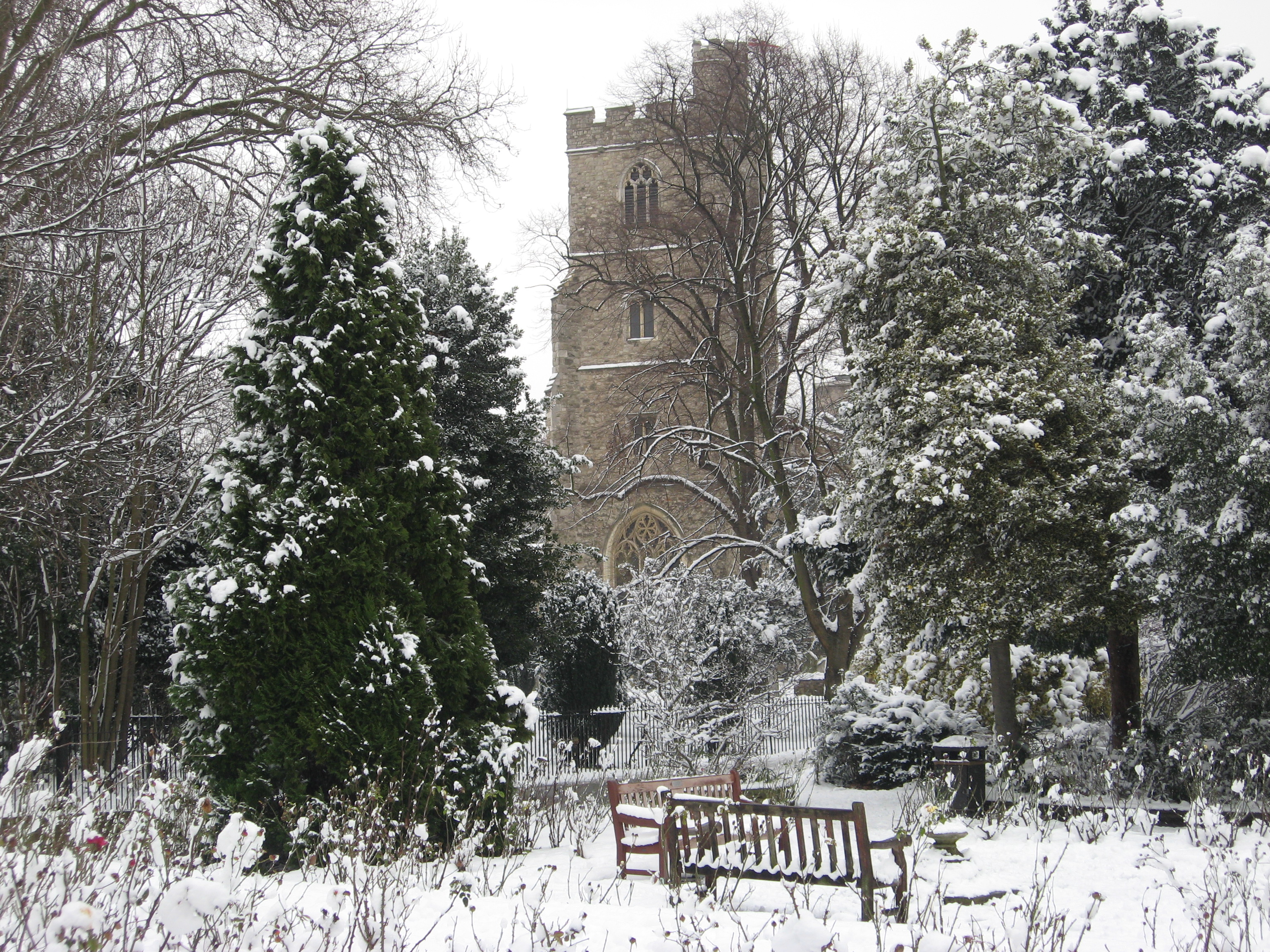
My friend B. gave me a gift card for a coffee shop chain, for Christmas.  He said it would allow him to buy me a coffee or hot chocolate if I ever really needed one, and he was not there in person.  I figured that if I were in London, he would want to buy me a birthday mugful, to celebrate.  So, in a way, I had him with me, in this new city where I am still a stranger, as I ordered a gingerbread latte.  Half a shot of espresso but double ginger.  No milk froth.  Take away.  “There you are, young lady,” said the baristaYoung? I had not heard that in a while.  Lately, in London, men have been offering me their seats on the Tube.  It made me smile, as I followed the winding streets towards the market place and the now familiar sights.  The Big Issue seller with the jester hat, guaranteeing “no horse meat” in the magazine.  The market stalls with their bright stripy canopies.  The  imposing, stern Norman church, rising at the top of the slope, dominating the square.  The rain seeps through me in spite of my umbrella.  It generally rains on my birthday, even when I am in a Mediterranean country.  I think I was born on a rainy day.

I take a sip of my gingerbread latte.  For me, it will always be a taste of New York.  The memory of Broadway shows, of sheared rabbit earmuffs, of strolls down 42nd Street, of the Chrysler Building soaring hopefully into the sky, and of Billie Holiday’s voice blasting from a kiosk on Union Square on a snowy Sunday morning.  I fell in love with New York whilst still on the bus from JFK to Manhattan.  It is for me the city of Optimism.

Every city I have visited, so far, has greeted me with a predominant feeling or impression within a day or so.  Sometimes, within hours.  In Cambridge, it was the self-assured individuality of every building, and that unmistakable, moonbeam sound of King’s College evensong.  Cambridge, for me, is the joyful and blood-stirring Pursuit of Perfection.  The grey, majestic, Norman towers of Durham instill in me a desire for Reading and Research.  An echo of Ancient Knowledge.  Venice, with its Moorish arches and murmuring waters, advocates the Pleasure of the Senses.  Brugge, another favourite city of mine, with its crow-stepped gables and minutely crafted bas-reliefs, evokes the love of Precision, and Pride in One’s Work.

It is this predominant feeling that has not yet come upon me in this new city I appear to have moved to, that I am seeking.  Without this impression, I am lost.  I need to know how I feel about this city – an identity with which my mind can match it – so that I can have an anchor.  Only then, will I be able to decide whether or not to drop my anchor here.  Until then, I am like the unsettled Flying Dutchman.  When I close my eyes, at night, I cannot remember the arrangement of the streets and seek, in vain, to picture a specific landmark – even though it is a city rich in ancient and beautiful buildings.  I like the Cathedral spire that plays hide-and-seek with the fog, and its atmospheric monastic cloisters.  I am slowly befriending the odd-looking, cubic Norman castle and its promise of sinister tales.  My heart, lungs and thigh muscles are learning the rhythm of walking up the deceptively steep hills (when Noël Coward described this county as “flat”, he clearly had never been here, or was using heavy sarcasm).  I can recommend going to sit in Lady Julian’s cell, to enjoy the peaceful silence and collect one’s thoughts.  My inner urban rat natural distrust is easing into accepting the genuine friendliness and willingness to help of the local folk.  Their obvious love for and pride in their city make me feel welcome.  When I say that I am trying to move here, they reply that I could not have chosen a better place.  I guess there is no better place, for a writer and translator, than England’s first ever UNESCO City of Literature.  A city with a unique history of contribution to words.

I just need to find that feeling.  That impression.  A sign.  Please, Norwich, won’t you give me a sign, as a birthday present?

Scribe Doll

Posted in Travel | Tagged , , , , , , | 22 Comments

Habit as an Enemy

You do not need to travel across the Globe, to experience culture shock.  It can suddenly creep up on you where you least expect it.  Just a few hours away from where you have spent the last eighteen years.  Habit can turn on a sixpence, from stable friend to lurking enemy.  Habit is an addiction with painful withdrawal symptoms.

Silly, superficial things are suddenly making your day-to-day life a misery.

A bed at odds with the shape and nightly movements of my body, from which I wake up far from ready to face another day of novelties.  Sheets with an unfamiliar texture, that my skin rebels against.  I have complained about my unyielding London futon for many years.  Now, in this far better bed, my body suddenly whinges, “better the devil you know.”  Habit.

The silence, at night.  Listening out for the odd car, in the distance, longing for something to break the deafening quiet; for a lullaby of airplanes, road traffic or even the neighbours’ TV, to ease me to sleep.  I remember that it was partly the constant London noise, that drove me away.  Habit.

Shops closing at 5.30 p.m.  I suppress a giggle when the sales assistant tells me.  I stare.  She is serious.  I rush through my purchases, acting like the spoilt Londoner that I am, as though the early closing time is there with the sole purpose of inconveniencing me.  Then I think, people here must enjoy longer evenings, and I might soon enjoy those, too.  After all, late shopping can be a nuisance.  A habit.

Strolling across town at 7.30 p.m. on a week night, and hearing my footsteps echoing on the pavement.  I respond to the nod or smile of the few other passers by I encounter.  The dim, yellow street lighting casts sadness over me.  I long for the bright lights of Piccadilly and Soho.  I am suddenly and unbearably homesick.  Then I think, actually, how peaceful it feels to walk in a semi-deserted city, in the evening, and not have to be on alert, and not have to elbow my way through crowds.  The dim yellow street lighting gives the Mediaeval buildings a soft golden tone.  Golden enough to feed my imagination.  I could get used to walking along these narrow streets, in the evenings, and dream.  Another habit.

I slalom on the narrow pavement and overtake the other pedestrians.  I have always walked very fast, and have little patience with people who advance slowly.  I often fantasise about London’s Oxford Street pavement being divided into two lanes – one for dwindlers and ditherers, and the other for people who whizz, like myself.  Around the corner, I practically collide head-on with another pedestrian.  We both stop, though my feet practically screech on the cobbles.  She smiles.  “After you,” she says, gently.  I find myself smiling back.  “No, after you, please.”  More smiles, and we continue along our opposite ways.  What calm, nice people, I think.  I drop my pace.  Why rush? I am not late anywhere, and it is not like I am going to store the saved time anywhere, am I? It is just another habit.

In go to a church service.  A solemn building, rich in history.  I notice glances in my direction.  I am the stranger, the new person.  My clothes and body language must scream London.  After the service, I am surrounded by people welcoming me, smiling, expressing hope that I might come again.  The urban rat in me, used to being ignored, feels a little overwhelmed.  The fact that I did not take Communion, this morning, has been noticed, noted and now remarked upon.  Do I know that I am most welcome to go up for a blessing? I bite my tongue and refrain from asking if anyone at all was watching the vicar instead of me, because I sense not criticism but kindness around me.  I smile, shake hands, and walk backwards towards the exit.  I suddenly feel the urge to run, escape.  I long for the anonymity of the Central London churches I frequent.  The same churches where I so often feel so lonely, because I do not feel that I belong.  There is no pleasing me.  I could kick myself.

I need to get used this city’s kindness.  It is a gentle city.  A city where many street lights are put out at midnight.  It is just a question of getting used to a new place and new ways.

I think I will stay a little longer and try to form new habits.  I do not know if I can.  But I think it is worth trying.  After all, the city is proffering her hand to me.


Scribe Doll

Posted in Travel | Tagged , , , , | 22 Comments

Trying Out a New City

Is two weeks long enough for a new city and you to decide whether you would make a good team?

Well, two weeks is all I have.

The fog was so thick, this morning, it had swallowed up the Cathedral spire.  In a city where I do not know a soul, it was unnerving not to see the familiar landmark.  In a new city where everything and everyone seems strange and alien, buildings become your first friends.  The winding cobbled street with the Teddy Bear shop.  The unnaturally white, unnaturally square Norman castle that looks like a sugar cube; or a sandcastle come out of a mould.  The large, late Mediaeval church dominating the market place.

As soon as I got off the train, last Tuesday, I smiled.  I kept smiling even as I discovered, whilst dragging my two heavy suitcases, that – contrary to my previous notion – this is a place full of hills.  I wanted to introduce myself to this new city with a smile.  I wanted to make a good impression.

The city smiled back.  A shy smile, through the bleak grey sky and the grey stone buildings but, I think, it was a smile.

You prepare for so many possible problems and hurdles, when you go to an unknown place.  I thought I had anticipated every difficulty.  One thing I had not anticipated was acute physical pain.  Sharp, burning pain in my back where the cold and damp air had penetrated, grabbed a muscle in its fist and twisted.  Let’s see what you are made of.  Let’s see how determined you are.  Let’s see if I tighten my fingers around your shoulder blade.  What if I dig in my nails? What – not smiling? I hope the sun – that looked like a brilliant white china plate behind the grey clouds, today – elects to smile at me, soon, and steps out in its golden glory to warm my chilled back.

When I pack to go to a new city, I choose the most neutral clothes.  Nothing to attract attention.  I want to be able to spy on the city before it notices me.  My tweed flat cap is not suitable, I told myself, choosing, instead, the dark brown beret.  It is too striking, too bohemian – too London.  Then, at the last minute, I put it on my head.  That flat cap is me.  In this new city, I thought, I want to remember who I am.

It is a beautiful little city.  I can walk across it in an hour.  Passers-by smile when they meet your eye.  They stop what they are doing to show you the way.  A glint of amusement flashes across their faces when I tell them I am studying the city, as a potential new home.  “We call this city ‘the graveyard of ambition’,” someone told me, this afternoon.  It is the second time I have heard this, in three days.

“Why?” I asked.

“Because we have all these high-flying big city people coming here, taking a look, loving the place so much they decide to stay here.”


I have been to cities with much worse reputations.


Scribe Doll

Posted in Travel | Tagged , , | 33 Comments

Time for a Change?

“Change your city, change your luck.”  It is a Jewish saying, my osteopath told me.

In a Russian fairy tale, the Tzar bids his sons go into an open field with their bows and arrows, and aim into the air.  Where their arrows land, there lie their fortunes.

In my case, I wrote the names of seven cities on small pieces of paper, folded them into tiny squares, put them in a mug and shook.  I closed my eyes and pulled one out.  So be it.  I unfolded the paper and read the name of an old city, built on a land so flat, the horizon goes on for ever, and where the skies are colourful and moody; where there is no mountain or hill to tame the wind.  A city of linguists and scribes.

I have lived in London for nineteen intense years.   Intense, because it cannot be otherwise, in London.  It is a city that flings open its doors and offers you the best of everything money can buy.  Theatre, concerts, art, restaurants, libraries, etc.  Whether you like the sophisticated boutiques of the Burlington Arcade, the self-styled scruffiness of Camden Town, or the quirkiness of Notting Hill, all you have to do, is ask – as long as you can pay.  If you cannot pay, though, the doors of all those rooms of glitter and possibilities slam shut in your face.  If you have no money, your London is a draughty, lonely corridor of unforgiving grey.

I am weary of looking through other people’s windows.  Of spending Christmas alone because one of London’s aberrations is no public transport whatsoever for thirty-six hours.  Of rents soaring while my income slumps.  I am weighed down by my sackful of errors and failures, which London does not forgive.

I am black and blue with London’s knocks and am tired of focusing my energy on fighting back.  My back is stiff and hunched.  It is time to stop fighting and start building.  I do not want to hear “What doesn’t kill you makes you stronger.”  Instead, I will heed the warning of one of Literature’s most perceptive observers of human nature, Somerset Maugham, that  “It is not true that suffering enobles the character; happiness does that sometimes, but suffering, for the most part, makes men petty and vindictive.”

Dickens shows us that it is misery and loss that gradually harden Ebenezer Scrooge’s heart.  He is not born cruel.

If I leave London, I shall miss it.  I think of hearing so many different languages on the bus, of warm crusty bread from the Turkish Bakery, of poppy seed cake from the Polish shop and of soft leather shoes from the Italian store.  I think of the thrill filling up my heart when the orchestra tunes up at the Royal Opera House, and of the excitement at hearing the opening chords of a West End musical.  I think of the high-gloss polish of a stage actor’s velvet voice, uttering powerful, soul-stirring words.  I think of French breakfast on a summer’s morning, on the Old Compton Street pavement, before Soho is fully awake.  I think of the luxury of a West End Opening Night party, where it is so easy to forget there is an economic crisis just outside the shiny revolving doors.  I must remember that I can no longer afford any of that.  Theatre tickets are now out of my reach, and Soho breakfasts seem like too much of an extravagance.

I think for as long as you are able to imagine good things happening, there is always the possibility they might happen.  It is imagination that keeps you alive.  But if you lose the ability to imagine, then it is time to move on, and look for something new to capture and revive your imagination.  Time – at least  to consider the possibility of change.  Time to straighten up and look beyond the horizon.

And so, time to pack my suitcase.

Scribe Doll

Posted in Odds & Ends | Tagged , , , | 37 Comments

Britain Sees Snow for the First Time – Again

IMG_0058We had some snow, a couple of weeks ago.  Soft, white powder sifted out of a dark grey sky all day, without stopping.  Eventually, the dusting on the ground and roofs thickened to a cloak, and muffled the city sounds.  I love snow.  The crunching under my boots, the sensation of cleanliness, the crisp air.  I start listening to Grieg’s Peer Gynt, Tchaikovsky’s Pathétique and other “snow soundtracks.”  I wear a thick pair of Irish wool socks inside my only footwear that is really snow proof – a pair of black Wellington boots.  No – not the trendy ones, that bear a label with another word for “pursuer” right below the knee, and that all the London bright young things are now wearing at the first few drops of rain.   These ones, I bought from a Cambridge camping/army shop, and cut down to calf-length with a pair of kitchen scissors, in preparation for a winter trip to Wisconsin, about twelve years ago.  Wisconsin, in a place where the snow was high and the squirrels gargantuan, where I caused much vocal excitement among the neighbourhood dogs for being the only pedestrian, and where I could not find anywhere to serve me dinner after 7 p.m.  In a place where the landlady of the guest house could not fathom why I considered sweetened pancakes and maple syrup a little sickening (I finally asked her for scrambled egg on toast and she put sugar on the toast!)

IMG_0063

Back to the snow.  I find snow magical and there are few places in the world where snow possesses special, mind-altering powers, as it does in England.  For, indeed, here, it has the power to produce amnesia.  In England, it now snows most winters and yet, every year, the nation reacts as though it has never seen it before.  A few flakes suffice to trigger overwhelming incompetence and disorganisation in the land.  In London, except for the Centre and privileged areas like Chelsea, Kensington and Holland Park, the authorities mysteriously never seem to have enough grit to scatter on the streets.  Where I live, for instance, snow is 5% joy, snowmen and walks in the park (the first day) and 95% contending with icy pavements, trying not to slip and break a limb (the following week).

If you are lucky enough to live in area where grit is abundant, you see the ratherIMG_0065 unaesthetical transformation of fluffy white into brown slush.  When I was in New York, I noticed people spraying something on the snow which made it manageable for pedestrians whilst keeping it white.  Here, we lack the Manhattan sense of style.  In the spirit of no-nonsense practicality, we use unattractive brown grit.

When I lived in Rome, where snow falls ogni morte de papa (literally, “about as often as a pope dies”), when the white stuff did fall from the skies, I saw anti-slip chains on the tyres of many cars.  I have never seen them here.  Here, snow sends public transport into a panic.  Buses are delayed or cancelled and even the Tube can be affected.  I am still trying to figure out how snow can stop underground trains from running…

IMG_0071It is Candlemas.  The snow has disappeared.  Vanished, as though it never happened.

By Shrove Tuesday, our memories will have been wiped cleaned.

Then, next January, when it snows again – snow? What’s snow? How do we cope with it? Oh, dear!

Scribe Doll

Posted in Odds & Ends | Tagged , , , | 19 Comments

The British Obsession With Accent

In a café, after a West End matinée.  My friend has just introduced me to an acquaintance of hers, then left us alone to go and order tea.  “So what did you think of the show?” he asks.

I reply, “Well, I enjoyed the number with –”

“Where are you from?”

I am interrupted mid-sentence.  I say nothing, and glare.

“Where are you from?” Almost an order.

“It’s a long story,” I say, coldly.

You would think he would take the hint and back off.

“What do you do?” His tone becomes insistent, almost frantic.  Like a man lost at sea, desperate to clutch at something, or he will drown.

I can see he will not even pretend to be interested in what I have to say about the show.  “I’m a translator,” I say.

A glimmer of hope flashes across his face.  “Which languages?”

I sigh with as loud a pectoral rasp as I can produce.  “Italian, French and Russian – into English.”

His face relaxes.   His index finger taps on a list in the air.  “Ah, so you’re… (sotto voce) Italian… French… Russian.”

Thanks be!  He is now safely clinging to a bouy.  Because here, until you are able to pigeon-hole someone, you are drifting in dangerous waters.

Like so many others, this man has made the easy assumption that, just because I speak these languages, then I must automatically come from those countries.  Actually, by blood, I am not Italian, French or Russian.  But I did not want to play on the man’s vulnerability, and confuse him further.  What I wanted to tell him, was that I am mostly English, with an authentic English temper spiked with inborn sarcasm and – since I was not brought up in England and trained to keep it in check – if provoked, it flies out, unrestrained, in its purest, most unadulterated, caustic form.  The kind that would make John Donne, Sir Francis Bacon and many characters played by Maggie Smith cheer.

However, one thing I was taught, is that sarcasm is like fencing.  You do not engage with someone who cannot keep up with you…

We know from George Bernard Shaw’s Pygmalion that, in England, what places you, gives you your social position, and puts you into the correct trial dock, is your accent.  Even now, your accent is what influences people’s behaviour towards you.  Is it regional? Is it cut glass? Or – worst of all – is it slightly foreign?

It seems the British are incapable of having a conversation until they have placed your accent.  Until they can do so, panic – or disapproval – reigns supreme.  It is as though what you are saying cannot be heard or mentally processed until the exact origin of the speaker is determined.  As though they cannot decide whether to believe you or not until they know where you come from.  You can parry as much as you like; they will not stop until they have gained access to your very D.N.A…

Many years ago, I was at a luncheon in a Cambridge College.  I was having a seemingly anodyne conversation with one of the Fellows about the acoustics in an opera house.  I remarked that the sound naturally rose, so the best way to judge a singer’s voice, was to sit in the gods.

“Do you have scientific proof for that?” asked the Fellow.

“No.  I’m not a scientist.  Next time you’re at the opera, sit in the gods, and judge for yourself.”

“You weren’t born in this country, were you?”

There it was, slam bang below the belt.  As though the fact I might not have been born in this country suddenly invalidated my opinion about music.

“How is that relevant to the conversation we were just having?” I asked.

“Well, I’m making it relevant because it’s interesting.”

“Well, it’s not interesting for me.”

Eventually, he apologised.

Interesting? Then go the British Library and pore over a manuscript.  That would be far more interesting. 

Another thing which puzzles me.  What importance can the place of your birth possibly have, except for governments in deciding whether or not to grant you citizenship? What difference does it make where I was born? The place of birth does not have any bearing on my blood heritage.  If I had been born on a boat in the midst of an ocean, would that make me a fish? Personally, I was born in one country but my parents came from other parts of the world. So which is my country? I am half-English, I love England and feel English – until someone rudely interrupts me mid-sentence to ask where I am from.  There are times when I truly wish some of the British advocacy for political correctness, politeness and inclusiveness would be extended to me.

A few weeks ago, once again, I was bulldozered by a lady in the shop, while I was making an observation about the weather.  She thought herself very perceptive in declaring me French.  I enlightened her by saying that, although I had received a French education, and had lived in France for six years, I was not, in fact, French.  I normally wait what I consider a polite amount of time before I ask strangers where they come from and, even then, I prefer to wait until the conversation touches upon the subject of languages, travel or geography before I enquire.  This time, I made an exception.  “Oh, I’m English!” she retorted with a noticeable expression of outrage.  “It’s an upper-class English accent.  Queen’s English.  Now if you were English, you would know I sound aristocratic.”

She brought back to mind Saint Bonaventure’s quotation, “Exemplum de simia, quae, quando plus ascendit, plus apparent posteriora eius” or Sir Francis Bacon’s translation thereof, “He doth like the ape, that the higher he clymbes the more he shows his ars.”

I nearly replied that it was rotten luck her aristocratic family had clearly been too impoverished to purchase her a copy of Debrett’s Etiquette and Modern Manners but, as I said, one thing I was taught, is that sarcasm is like fencing…

I find it rather distressing, that given our national pride in subtlety, most people do not seem to take a subtle hint that you are trying to evade the question.  Try and change the subject, and suddenly, they all turn into prosecutors.

Where are you from?

Well, it’s a long story…

Well, I shan’t bore you…

Oh, I don’t really like to talk about it…

For all your attempts gently to elude them, they push ahead.  However, try telling them to “mind their business”, and you are the one perceived as rude.

I have been asked if I am French, Dutch, Irish, German, Swedish, Spanish or Irish.  The most frequent choice, though, is probably South African – even though I have never ever been to South Africa.

Yes, I find it tedious to keep trying to explain to people where I come from, since I am like the pattern on Harlequin’s dress, and so unable to give a straightforward answer.  I have the non-descript accent of one who was exposed to several languages from birth.  However, I am not averse to satisfying their curiosity, when they phrase the questions with  some delicacy, as genuine, enthusiastic interest, and do not cross-examine me as though sitting in judgement of me.

A couple of months ago, I was at a drinks do with a friend.  We struck up a conversation with a man.  He happened to be a barrister.  We spoke for several minutes – about the Royal Opera House production of Die Meistersinger von Nürnberg, about the music of Hildegard of Bingen, then about travelling and local customs.  Then he cocked his head and smiled.  “May I assume you’re not from London..?” he said, his tone politely unobtrusive, suggesting his curiosity was prompted by my enjoyable contribution to our earlier conversation, rather than suspicion on his part.

I was happy to tell him my whole story.

And if you really want to hear my accent, listen to this podcast: http://redroom.com/member/katherine-gregor/media/audio/crows

Scribe  Doll

Posted in Odds & Ends | Tagged , , , , , , | 30 Comments

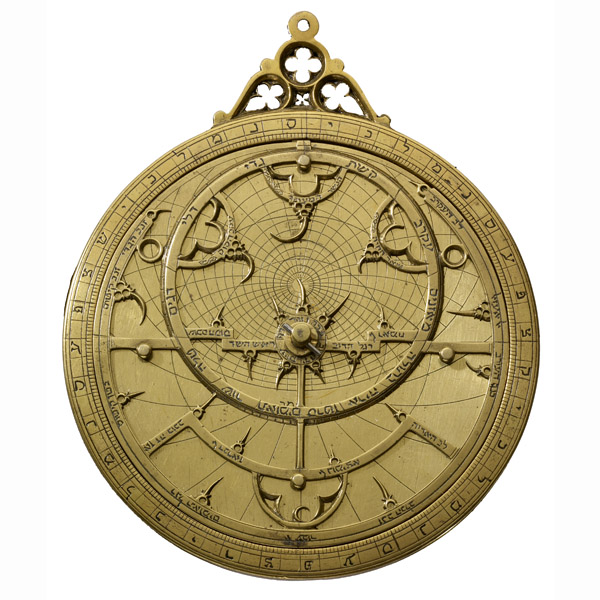
The Astrolabe. Why have Sat Nav or a Smartphone?

I have a favourite artefact at the British Museum.  One I never fail to go and admire, whenever I happen to be visiting this treasure trove of international archeology.

Copyright Trustees of the British Museum

Hebrew Astrolabe (front view) Copyright Trustees of the British Museum

It was a couple of years ago.  I was lucky enough to have the day off teaching, and was lazing in bed later than usual, listening to BBC Radio 4.  They had been broadcasting a wonderful series, in fifteen-minute episodes, called The History of the World in 100 Objects, but I had heard very few because of my workload.  That morning, I turned up the radio, and heard the Director of the British Museum, Neil MacGregor, talking about a fourteenth Century astrolabe.  I had no idea what an astrolabe was.  From the Greek, meaning “Star Finder”.  I was so mesmerised by his description that, within minutes of the programme ending, I had dressed, breakfasted, and dashed out of the flat.  I had made plans for my morning off but, at that moment, none seemed as urgent – or as fun – as going to see this extraordinary object for myself.  And so I took the Tube to Bloomsbury, and walked up the steps of the imposing Grecian building.

I was not disappointed.  Even now, the more I see this astrolabe, the more it fascinates me.  Peering through the glass display cabinet, my glasses on my nose, I long to hold it in the palm of my hand.  I yearn to feel the coolness of the gilt brass, and run my fingertips on the delicately engraved inscriptions and symbols.  Letters in Hebrew, Arabic and Mediaeval Spanish.  Symbols that remind me of Moorish arches and Gothic vaults.  Such a small object, yet charged with the knowledge of the man who crafted it with such precision, and the knowledge of the man who owned it.  Without doubt a highly intelligent, educated man.  Perhaps a scholar.  Or a wealthy man with a love for knowledge.

Hebrew Astrolabe (reverse) Copyright Trustees of the British Museum

Hebrew Astrolabe (reverse) Copyright Trustees of the British Museum

A small, beautiful instrument, crafted over seven centuries ago, during the Spanish golden age of the convivencia, when three religions brought their knowledge together for the love of Science and the Arts.  An instrument that can tell you the time, your geographical position with the help of the sun and the stars, draw your horoscope, and perform mathematical calculations.  A reproduction of the firmament, in the palm of your hand.  Unlike the BlackBerry from which I finally un-slaved myself, a couple of months ago, the astrolabe needs not be at the whim of signal, or charged up.  Moreover, let  us admit it – is it not aesthetically superior to any of the latest smartphone designs?

I read on the BBC website that the astrolabe was a globe, a map, a sextant, a chronometer and a compass, all in one.  So what led us to compromise our standards, and settle for objects that are inferior to this perfect and conveniently-sized one? I cannot help but consider it as yet another nugget of human brilliance which, like so any others, has been buried in the dust of modern ignorance.  We know so much more now – and so much less.

How I wish I could have an astrolabe, and someone to teach me how to use it.

I cannot recommend the episode on the Hebrew Astrolabe highly enough.  It is only fifteen minutes long, and can be heard on the BBC website here.  You can even download a free podcast.

I wish to thank the Web Team at the British Museum for kindly allowing me to use the image of the astrolabe.

Should you be planning to visit the British Museum, here is a link to the page about the Hebrew astrolabe.

Scribe Doll

Posted in Odds & Ends | Tagged , , , | 14 Comments

Epiphany and an Old Woman Bearing Gifts*

Traditionally, it is La Befana – and not Father Christmas – who brings gifts to the children of Central Italy.  It is on the morning of the Epiphany, that children would wake up to find packages under their beds.  If they had been good children for the preceding twelve months, of course.  La Befana is a dishevelled old woman in rags, covered in soot from the chimneys she slides down, and always with her broom, to sweep all the old year’s troubles away before the leaves your home.

Imagine my surprise, this morning, when I found a gift from La Befana under my bed.  Was I a child again? A glance in the mirror gave me a quick – if rather undiplomatic – assurance to the contrary.  And yet there it was, in my hand, a small velvet pouch containing six memories.  One for the first six days of the New Year.  Six gifts.  One by one, I looked at them.

ONE: an unexpected kindness 

I was broke.  I had to go into town, and the fares had just made their usual January leap.  I was queuing for the ticket machine at the Tube station, feeling miserable.  Of course, I had no one to blame but myself, but that only exacerbated my feeling of being totally useless.  Out of nowhere, a man – a stranger – walked straight up to me, a day travelcard in his hand.  He had a kind face.  “I’ve finished with this for today,” he said.  “Can you use it? It seems a shame for me to throw it away.”

I still carry that travelcard in my wallet, as a good luck token.

TWO: when animals understand

Feeling alone in a crowded Tube carriage.  I think, I speak four languages, but nobody can understand me.  I am defective and cannot be fixed.  There is no place for me in this world.    I understand you, without the need for your languages.  I look up and meet the deep, liquid gaze of a black Cocker Spaniel.  She is staring at me intently, wrapping me in the unconditional love in her glistening eyes.  You are not alone.  She is too far for me to reach out and stroke her silky head and long ears.  We stare at each-other until her master needs to get off the train.  She turns to me with a parting glance.  So now you know.  Don’t go having such silly thoughts again.  I wink back at her.


I am walking with a friend in Kensington Gardens.  Swans are loitering by the pond.  “I wish I could have a swan feather,” I say.  I walk up to one of the swans, who is grooming his silky plumage.  “Will you give me a feather?” I ask.  My friend looks on, tolerantly.  A feather drops from the swan but is carried away by the ripples in the water before I can catch it.  I ask again.  This time, the swan pulls out a long, snow-white feather, and tosses it unmistakably towards me.  My friend’s mouth is agape.  “No one would believe it,” she says.

I carry the feather inside the flap of my writing folder.


THREE: cover for a book that is to be written

I am having trouble starting my novel.  The prospect of writing 100,000 words fills me with insurmountable dread.  I do not know where to begin.  I am having tea with a friend.  He says, “Begin with this.”

He takes out a plain sheet of A4 paper, folds it half and makes it into a book cover.  On it, he writes the working title of my novel and my name.  “There,” he says.  “The cover is done.  Now you just have to write the book.”

It is so simple and yet so effective.  I go home and start writing.


FOUR: a family Easter

This friend has not known me all that long, and yet she invites me to be part of Easter luncheon with her family.  I have never met them, yet they welcome me not as a stranger, but as one of them.  There are no enquiring looks or awkward questions.  I am enveloped in the warmth of their hospitality and in the joy of the occasion, as though they have known me all their lives.    


FIVE: Doctor Theatre

This friend is my fairy godmother.  She always seems to know when I get lost in the dark oubliettes of my head, and need dragging out and throwing out in the sunshine.  She takes me to see a play.  She knows one of the actors.  I drink the carefully crafted language, the challenge of the thoughts behind it, the velvet timbre of the actors‘ voices.  I feel the joy of watching highly-polished British actors do what they do best.  No movement, no glance, no breath is out of place.  After the show, we have drinks with other actors.  I could listen to their voices for ever.  They are bewitching, mellifluous, rich.  I am in the presence of Beauty.  I dream of these voices someday speaking the words I write.


SIX: to honour two steadfast friends over land, dale and sea

I have not seen either of them for over a decade.  Yet no writer ever had such champions for her pen.  They always have a kind word to say about my writing.  They have not missed a week in nearly two years of my blog-writing.  Every week, they send encouragement.  Sometimes, it is no more than a word – but always a word chosen with the greatest care.  Just to remind me that they are right there, behind me, rooting for me.  Little do they know, just how much their support means to me.


As I pour the six memories back into their pouch, I suddenly see a seventh one, concealed at the bottom, which I had previously failed to notice.  It is a coffee shop gift card, a dear  friend gave me on New Year’s Day.  He said it will make it possible for him to buy me a hot chocolate if I really need one, and he is not around, so that I never feel quite alone.  As I put it in a safe place, I realise this card is actually a key.  A key to a story.  In fact, more than one story.

A story for every cup of hot chocolate on that card…


* Scribe Doll begs her readers to allow her just a tiny little dusting of poetic licence.


   Scribe Doll

Posted in Odds & Ends | Tagged , , , , , , | 22 Comments