Season Lag

What kind of person says she misses the Norwich winter when she lives in Nice? Yes, Nice.  That place on the Côte d’Azur, with the perennially cyan sky and soft, golden haze that sets the ochre and terracotta buildings aglow at sunset. The city with a bay that’s an expanse of apatite and aquamarine blue with flecks of mother-of-pearl.  And Norwich, yes – in Norfolk, in East Anglia, England (do I need to describe the climate?)

Well, this person was me this time last year.  A person with acute season lag.  If the expression doesn’t exist, it should.  I don’t know how else to describe the sense of unsettling confusion I felt on waking up in the morning, wondering what month it was.  Although I grew up in Mediterranean cities – Rome, Athens and Nice – I had until last year spent most of my adult life living on a island where the seasons are well defined (except summer, perhaps, which has commitment issues) and the weather is so unpredictable that it’s a favourite national topic of conversation.  

In Nice, my senses were suddenly in a state of limbo and bewilderment.  We moved there in September 2024 and I basked in the sensuality of a warm, bright autumn, but in late October things began to feel out of sync.  With almost nothing but umbrella pines, cypresses and other evergreens around me, my eyes craved the sight of the red and gold leaves of deciduous trees.  My ears longed to hear psithurism: that gently rustling, swishing sound the wind makes when it blows through the thick mane of a tree, making it quiver and sway.  It’s one of my favourite sounds, because it’s a sound I hear in the late summer and it heralds the approach of autumn, which I always associate with renewal and new opportunities.  Maybe it’s because I’ve never grown out of academic terms beating the time of my year, for me 1st September feels more like a New Year than 1st January.  On 1st September, I fill my mental satchel with new purpose the way, as a girl, I used to fill my satchel with new books, new pencils and new notebooks.  

I have a dear friend who hates autumn.  “Everything starts to die,” she says.  I don’t see nature dying in the autumn, but rather growing in inner power because it’s the time when she seems to say to humans, I have given you all of myself for two seasons. Now it’s the “me” time, the time to replenish and nurture myself.  And she becomes so self-confident that she trusts us to still find beauty in her as her trees stand proudly bare, unadorned by the leaves that have concealed the strong branches that reach ambitiously to the sky.  The tree sheds its leaves, but that is so that these may form a warming, protective blanket for its roots.

On Hallowe’en 2024, it felt odd not to be wearing, if not a coat, then at least a thick woollen jacket and a scarf. 

Where was autumn as I knew it? My body felt as though it had skipped a stage of the year and didn’t know how to adapt to what seemed like a slightly cooler extension of summer.  My Nice friends commented on the change in season they could sense in the air, of which I was totally unaware.  When it rained for a couple of days and just about every person I  encountered complained bitterly about the unfairness of it, my heart was light and jubilant.  I felt at home.  

Skipping a season was hard enough, but skipping two was even more disorientating.  Where’s the winter?! my body cried out.  Where is the kiss of cold on my skin? The lady from whom I bought olives and sun-dried tomatoes in the Cours Saleya market commented on the wind blowing in from the Alps. What wind? You mean this light breeze? Where are the gales that shriek and moan and rattle your window frames? 

When, on the evening of the winter solstice, I decorated the Christmas tree, it was more through mechanical habit than enthusiasm.  Even the day with the longest, most mysterious and magical night of the year felt to me as though it was happening in a distant world from which I had been banished.  I was homesick for the lead grey, purple, pink, gold and silver, shapeshifting East Anglian clouds.  I sat on the Promenade des Anglais, my brain bullying me into appreciating the stunning beauty of the red sunsets bleeding into the teal evening sea, while my heart longed for the dark, dramatic winter sunsets of graphite and gold I used to watch from my Norwich balcony.  

I missed the darkness.  Without that darkness, I had no canvas on which to project the colours of my imagination.

Of course, I couldn’t really confide my homesickness to many of my Nice friends.  Who wouldn’t have thought me insane? After all, Nice is filled with expats who fled these grey skies I love so much.

When I was once describing the East Anglian skies to one of my dear friends, however, she asked to see some pictures.  I sent them to her.  And this woman, a talented artist, saw, just from my photos, what I meant.  And this woman, who has never yet seen the East Anglian skies, was inspired to paint them.  Her picture now hangs in our living room.

When that so-called winter turned to spring, my body felt much happier.  Sunlight and warmth in the spring and then heat in the summer – however sweltering – felt normal, so to speak, even though – not having had a “proper” winter – I found it hard to appreciate them.  After all, I felt as though I had lived in the same season, give or take a few degrees, for ten months. 

When we moved back to Norwich, I watched the approach of autumn with intense attention.  I smelt the slightest change in the air, observed every tree slowly turn from green to blushing red, to ochre, to gold with unprecedented greed.  I spent hours on our kitchen window seat, breathing in the autumn wind and watching the birch across the street change colour.  When autumn tiptoed into winter, I welcomed the lengthening nights like friends who nurture my creativity.

As I write this, I can hear raindrops tapping against my sash window and the wind moaning faintly.  Across the street, I can make out the birch, skeletal, now totally bare.  There is something confident and powerful about a tree that has lost its leaves.  This is who I am, it seems to state proudly, unafraid to be seen in its intimate nakedness, the furrows of history and experience on its bark visible to all.

It’s winter.  I am whole again.

Posted in Uncategorized | Tagged , , , , , , , | 2 Comments

“I’m sorry it didn’t work out.”

(Apologies for re-sending this: I understand many subscribers were unable to access the earlier post. I hope technology will cooperate this time.)

“I’m sorry it didn’t work out.”

The phrase wormed its way into my ear even before the decision to move back was made.

Rattled, hounded, flummoxed and exhausted by French bureaucracy – a maze even without the extra complication of Brexit – I can’t remember which one of us first voiced what we had both been wondering for a few weeks, but dreading to admit even to ourselves: “Do you think we should move back to Norwich?” Thinking about it, it must have been me. I am the great quitter in the household.  Never had any sticking power. The one who walks out of a show during the interval if I am not enjoying it.  Or leaves a well-paid job with fringe benefits because I hate it. Once I realise I’ve made a mistake, something isn’t right for me, isn’t likely to get better or, if it did, the cost would be too high, I head for the emergency exit.  

Howard is the level-headed one, the one who perseveres, who doesn’t give up, who stays for as long as it is possible. Maybe the show will improve after the interval, maybe the job will get better, maybe it wasn’t a mistake.  Wait and see.

Still, once the possibility of having to go back to Norwich was uttered out loud, the sense of failure, crushing disappointment and overwhelming dread of a second international house move in less than a year made it at times hard to breathe.

Packing again, when we still couldn’t always remember where we had put everything after the move to Nice? Lifting heavy boxes again when our sprains and minor injuries had only just healed? Looking for a new home after finding our current one –however far from ideal – barely eight months earlier? Were we really doing the right thing? Moreover, the expense of two moves in one year would be very difficult to bear.

As my panic-struck brain was bouncing off the walls, Howard kept saying the one thing that made it land back into my skull: “What’s the alternative?”

The alternative would have been more of his lying awake at night, keeping track of all the forms we had filled in; of my waking up in the morning, my heart pounding so hard it felt as though it would tear through my chest, wondering if there were forms we’d forgotten to fill in.  I always joke that Italian bureaucracy is part Kafka and part Goldoni. French bureaucracy is pure Kafka. People smiled when I said that I’d rather translate La Chanson de Roland than have to navigate the impenetrable, labyrinthine language of administrative French.  

Before moving – permanently, we thought – to Nice, we had taken exploratory trips, made enquiries, done careful research. Lists of pros and cons were drawn up. Worst-case scenarios imagined. Sums done. We found answers to all the questions we thought of asking.  

Only there were questions that it never occurred to us to ask.  

In the end, I’ll never know for sure if we hit a brick wall because it stood unavoidably before us or if we simply grew too exhausted and confused to avoid it.  Imagination is the first step to a successful outcome and when you’re so physically and mentally tired you don’t have the strength even to picture your desired outcome, all you have the energy to hope for is peace of mind.  And sleep.

“What will people in Norwich say?” I finally blurted out as though that was a more important concern than the actual move.

I can’t remember what Howard replied exactly, but it was something along the lines of Why would they say anything? And if they do, why do you care? 

Norwich is a relatively small city.  Most of our acquaintances here know one another, and there can be a touch of Jane Austen’s novels in social gatherings and curiosity about our neighbours’ business.  More than once I’ve met someone who exclaimed, with a varying blend of excitement, as well as a pinch of triumph at being in possession of privileged information (information is a valuable commodity in relatively small cities and each morsel can be dressed in more than one sauce), “Oh, I hear that you –” followed by the account of an alleged adventure, disaster or extraordinary feat that made my relatively small life sound a great deal more glamorous than it is.  And now, I thought, these same people, all sympathy, would exclaim, “Sorry it didn’t work out” and my imagination and paranoia would add, Thought you were too good for us, did you? Look at you now, come crawling back.

Of course, nobody would be unkind enough to say that or think that.  Of course not.  Well, a few might think it.  Those, perhaps, who have lived decades in the same house, who find it odd that someone over thirty – let alone fifty or sixty – should still be renting their home, have had several different professions, and not had children.  Those in whose presence I always feel socially defective.  But why the hell did I care, anyway? I have no idea, but I suddenly understood people who, after emigrating and falling on hard times, are too ashamed to return to their home country.  It’s hard to go back with anything less than a spectacular, envy-generating improvement in your life.  Of course, I kept reminding myself that there were a few of friends who would not judge, smirk or make seemingly anodyne remarks that somehow managed to leave scratches on me.  I decided to focus only on them.  I figured that if they said Sorry it didn’t work out, they would add (and – when it came to it, they did) At least you had the courage to try.  

As we organised, packed and grew even more stressed and I found myself freefalling into burnout, there were dots of light to keep many of my shadows at bay: my friends. During our ten months in Nice, I had the joy and the privilege to meet a number of women who became treasured friends.  French, Australian, British, Irish, Fijian, Austrian, American. Generous, supportive, warm women with whom I felt I could be myself.  Explore this myself.  In that nurturing, accepting setting, I learnt more about this myself in ten months than in the preceding ten years.  Funny, how some people can bring out the best in you, then hold up a mirror so you can see this best in yourself. 

Sorry it didn’t work out.  I thought about this sentence for the entire train journey from Nice to Norwich, from the blue Mediterranean to the grey North Sea.  We’d planned to settle in Nice permanently.  That wasn’t possible.  But isn’t everything in life a lesson if you’re able to learn it? But this is not just a lesson.  Dear friends. Getting to know myself.  Invaluable gifts.

Yes, after three and a half months back in England, people still say, “Sorry it didn’t work out in Nice.”  To most of them I reply “Thank you” or “Oh, well” and smile politely.

It may not have worked out as we’d planned.  But it did work out.

Posted in Uncategorized | 6 Comments

“I’m sorry it didn’t work out.”

Subscribe to continue reading

Subscribe to get access to the rest of this post and other subscriber-only content.

Posted in Uncategorized | 4 Comments

Twelfth Night

After the formal New Year celebrations are over, the Old Year creeps back into our flat.  There are loose ends to tie up, plans to draw up with the New Year, work to do for a smooth handover, without all the late December pressure that demands an abrupt, unrealistic – not to mention impractically quick – change of guard.  

2024 having been the most tumultuous, eventful and stressful year I’ve ever known – I moved house and country – I am grateful for this period of adjustment.

And so 2024 and 2025 spend a few days swapping notes, negotiating agreements, defining roles, and, importantly, deciding what 2025 keeps from her predecessor and what 2024 takes away with him.  Predictably, the Old Year’s experience and wisdom is in favour of leaving behind more things than the New Year, bursting with dreams and good intentions, is willing to keep.  During the transition parley, scheduled to be completed on Twelfth Night, when 2024 can finally retire, there are things stacked up by the front door, waiting to be either removed or brought in.

“You can definitely take that away,” 2025 says, pointing at a pale grey, translucent box labelled PROCRASTINATION, containing large blocks of ice.  2024 nods, lifts the heavy box with some difficulty, and puts it outside the flat, in the corridor.  “I’ll throw that on the beach,” he says, “let it melt in the sun.”

He then comes up to me with a large, empty cardboard box.  “All right, Katia, put  all your you-know-what in here.”

I start by pulling the offending substance out of my pockets.  Smelly black gunge that sticks to my fingers as I shake my hands hard to drop it into the box.  There’s also some in my shoes, which I remove and scrape as thoroughly as I can.  The harder I try to get rid of the gunge, the more it clings to me: I can practically hear it protesting, rebelling against being expelled.

“All of it, Katia,” 2024 says gently, lifting the box to me.  “You don’t need to hold onto it any longer.”

“Think of all we can achieve when you’re free of it,” whispers 2025.

I know they’re both right, but the last remaining black gunk is hard to eject.  Meanwhile, what is already in 2024’s box is bubbling, shrieking, fighting to burst out of the box.  “Courage, just do it,” says 2024.  I finally cough up something that resembles a gooey, smelly, black fur ball, which lands into the cardboard box.  2024 quickly seals the box and sticks on it a label marked TOXIC: CONTAINS FEAR.  “And this is going straight on the fire.” 

The ordeal has left me tired, but feeling much lighter. 

The two years are now sitting at the dining table, sifting through my address book, making a list of friends and acquaintances to keep, another of those to let go of.  The list of those to give up is growing alarmingly long, leaving only a few names on the keep-list.  I protest, although my opposition sounds more like pleading.  “But I don’t want to drop all these people.  I care about them.”

“When was the last time they reached out to you?” 2025 asks, arching an eyebrow.

“I spoke to him – to her – and to her only last week –”

“Because you contacted them.  When was the last time they took the initiative to contact you?”

A feeling of overwhelming sadness radiates from my chest into my stomach, and I watch, speechless, as 2024 feeds the long list of people I’ve known, socialised with for many years, into the shredder.

“Don’t fret,” 2025 says with a wink.  “I bring you new friends.  Friendship is an action, not a state.  I bring you true friends.”

As dusk grows darker and blurs the outline of the bare branches of the linden trees outside our French windows, the handover process is all but complete.  It’s almost Twelfth Night, the time by which 2024 must leave.  All the negotiations between the Old and the New Year have so far been respectful and civilised, but now I sense growing tension and a strong disagreement over the last remaining item by the front door.  It’s a large iron trunk, rusty in places.  2025 is adamant it should go, 2024 insists it should stay.  “What’s in the trunk?” I ask.

They open it and I see that it contains my translation work.  Books in Italian, in French, and their English versions.  And books yet to be translated.  Contracts with publishers.  “Hey, you can’t take that away, 2024,” I say.  “It’s my job, my bread and butter.”

“My point exactly,” 2024 replies with a forceful nod.

“Yes, but look at how much room it takes up,” says 2025.  “There would be nowhere for me to bring this.”  She produces what is undoubtedly the most beautiful item in the flat: an oak chest, magnificently carved, with a painting of a rowan tree on the hinged lid.

“Would you like to take a peek?” 2025 says, a twinkle in the eye, sliding her finger tips under the lid and lifting it.  

The oak chest contains fountain pens, bottles of ink, and lined notebooks.  All brand-new.  There is also a large supply of drawing materials: sketching pads, fine felt-tip pens, mechanical pencils, a palette, tubes of watercolour, brushes.   My heart is suddenly filled with longing and joy.  

I know that only I can settle the argument between the Old and the New Year.  I have to decide.  I propose a compromise: “How about we store my translation work in a smaller container?”

Happy with my suggestion, 2024 immediately transfers all the books and contracts into a smaller, lighter, attractive silver box, small enough to fit on a shelf or in a corner of the room when it’s not needed.  Importantly, the oak chest with the rowan tree lid can now stay.

It’s dark outside.  It’s the twelfth and last night of Christmas, time for the Old Year to hand over power to the New.  They shake hands, with appreciation and wishes of good luck.  I hug 2024 and thank him for all the gifts, all the experiences, all the lessons he gave me.  I promise never to forget him.  He smiles at me warmly and heads out, shutting the door behind him.  I return to the living room, where 2025 is waiting for me, grinning ear to ear.  She rubs her hands together. “Right,” she says, “let’s begin.  We have much to do.”

Scribe Doll

Posted in Postcards from Nice | Tagged , , , , | 11 Comments

Postcards from Nice: the Feast Day of the Patron Saint

(Sunday 6th October 2024)

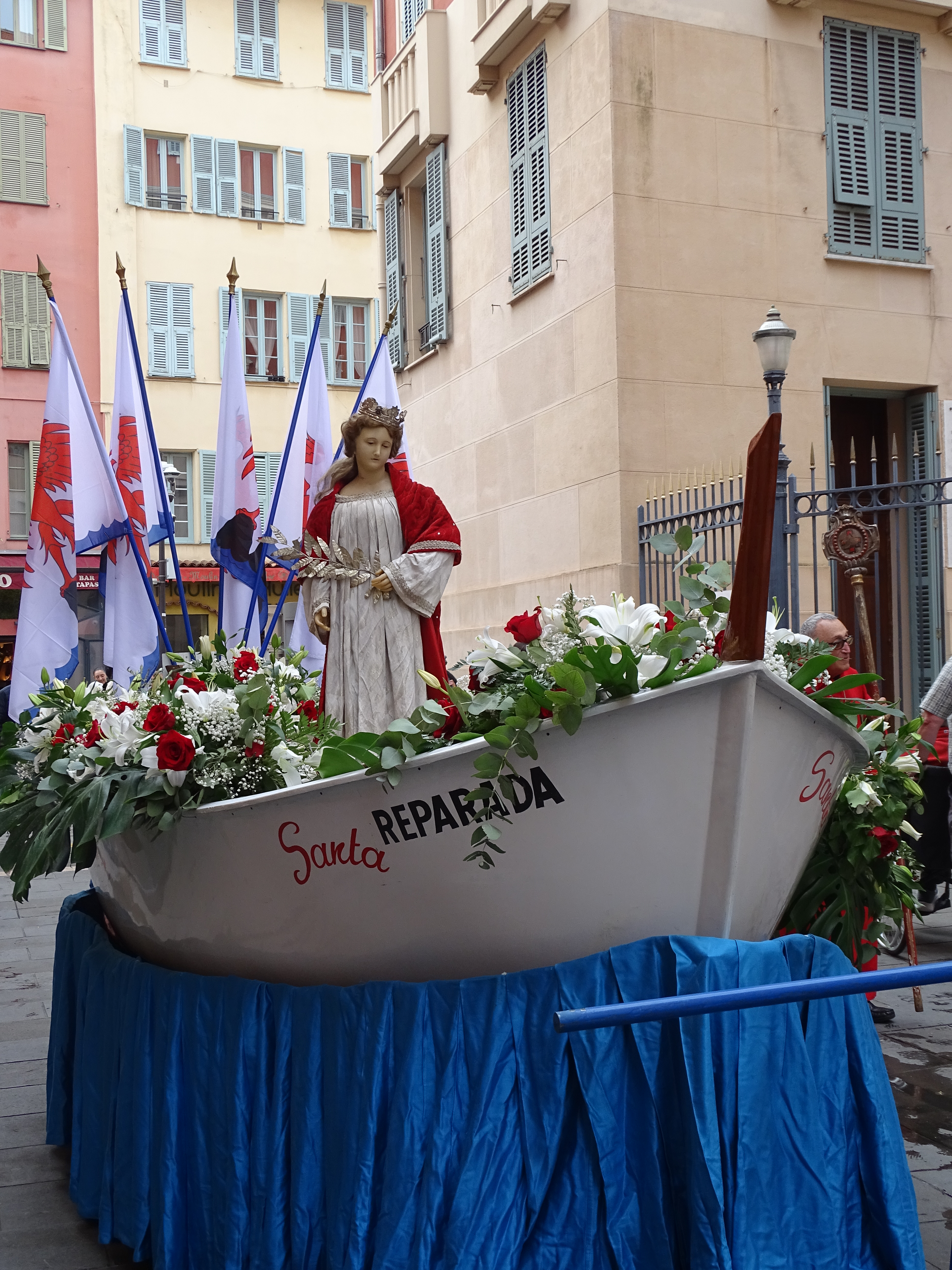
A few people have already gathered outside the mairie in the old town.  The statue of Saint Réparate stands ready in a white boat filled with lilies and red roses, eyes downcast, holding a silver olive branch. Her soft brown hair waves down her back, a scarlet cloak over her modest white shift.  Except for a small crown sitting at a slight angle on her head, she wears no adornments.  This is no Italian or Spanish saint overdressed and overjewelled, but the patron saint of a city that began as a fishing village.  At the stern, five flags with the city’s coat of arms: the crowned red eagle dominating three hills.

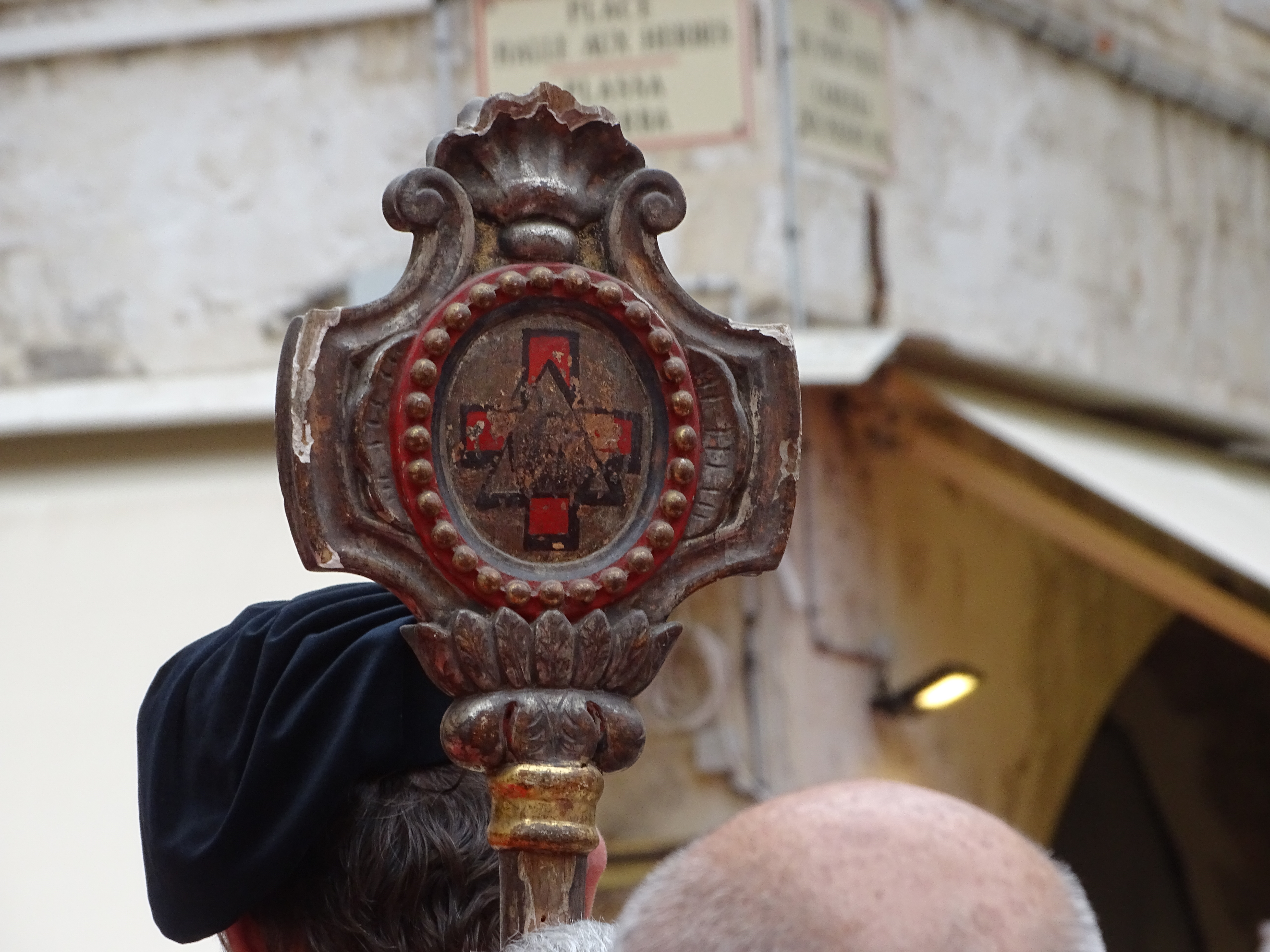
I see people in bright red hooded habits, a silver cross hanging from their necks.  They are soon joined by people in similar cassocks, only in white.  The large camera I carry gives me the nerve to ask a man standing next to me who these characters are.  “Penitents,” he replies good-humouredly.  “Red, white, black and blue.  The confraternity in red was the one helping pilgrims heading to Jerusalem, the ones in white were the hospitallers, the ones in black took care of the dead during the Plague and the ones in blue – ” he looks around, “there aren’t really any left. They looked after fatherless children.”

There are few tourists.  Those present are mostly locals and I catch fragments of conversation in Niçard dialect.  I used to hear it frequently when I was a child here, but I’ve hardly come across it since we moved here a few weeks ago.  Apparently a sub-dialect of Provençal, it sounds like a Franco-Italian hybrid.  I love living in a city where some people still speak the original language, a language unique to this place.

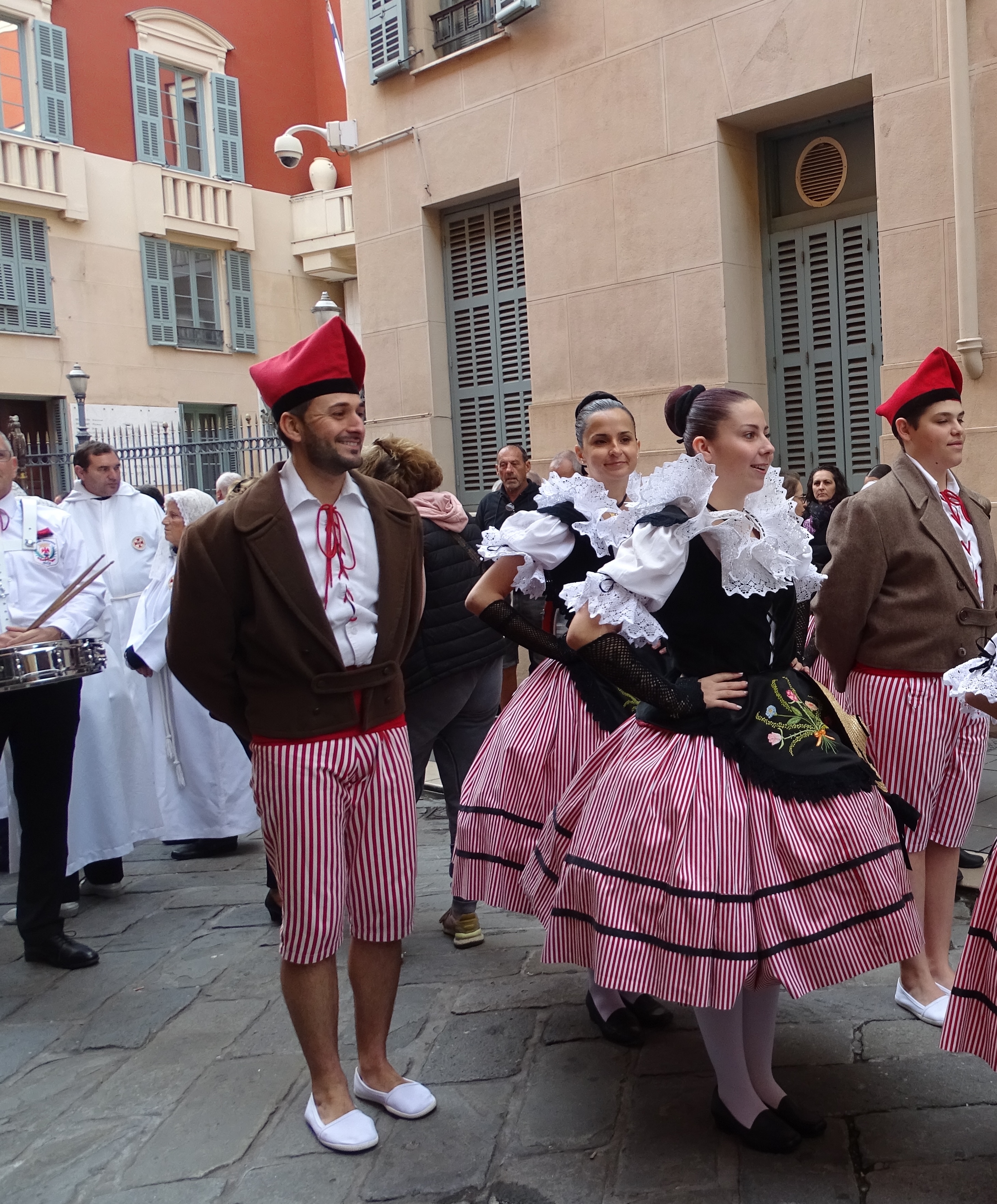
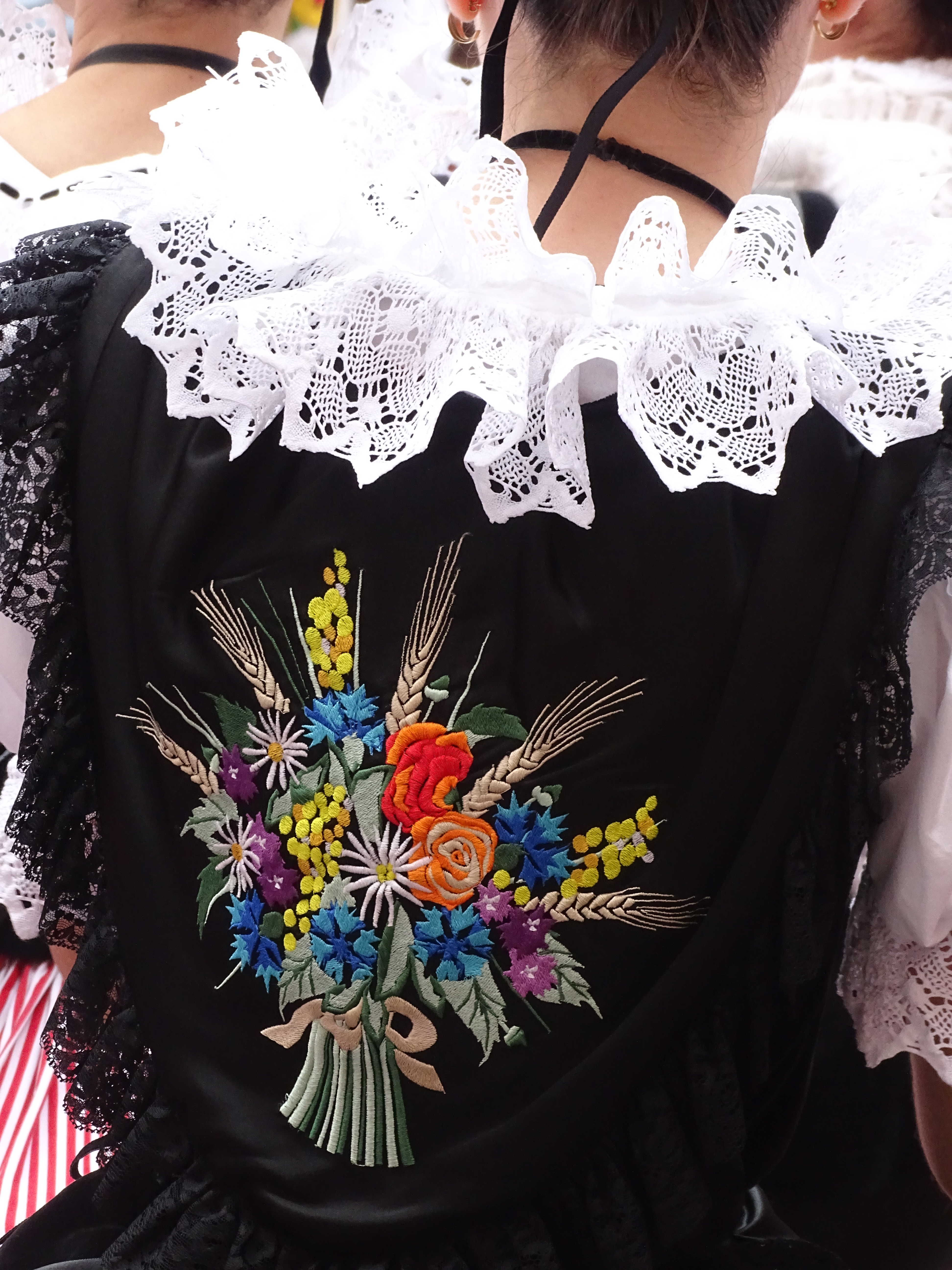
As more people assemble, dancers of the Nice folk dancing group Ciamada Nissarda start trickling in. The women and girls with their hair gathered in a tight bun, frilled blouses, black bodices and red and white striped skirts.  They wear richly embroidered black shawls and aprons.  The men have red caps, waist-length brown jackets and short trousers that match the women’s skirts. 

While waiting for all the participants to get organised, the woman accordionist plays tunes of Edith Piaf songs.  Somehow, their Parisian nature is at odds with the surroundings.  Nice doesn’t feel like typical France to me.  And it is certainly poles apart from Paris.  

Finally, everybody who has to be ready is ready and the procession starts.  The mayor is here, the dancers stand in line, the members of the confraternity have taken their places.  The boat with the statue of the patron saint is pulled through the narrow streets of the old town.  I am surprised by the relatively small attendance.  I guess the tourists don’t know about this, and the locals have seen the celebrations many times already.  Perhaps the forecast of rain has also put some people off.  The rain is a big deal here, a reason for not doing things.  As someone from England, this always makes me smile.

Once the statue of the saint is safely in the Cathedral and Mass has been said, it’s time for  the festivities, with traditional Niçois dancing in Place Rossetti.  I notice that the crowd of onlookers has grown significantly.  The secular side of the festivities appears to have attracted more of an audience.  As always at such events, my heart starts beating in time with the drum.  I try to take as many pictures as I can without getting in anyone’s way.  The rain has held off.  Of course.  It couldn’t have rained on the feast of the patron saint of the city.  Nice wouldn’t have stood for it.

Scribe Doll

Posted in Postcards from Nice | Tagged , , , , , , | 9 Comments

Postcards from Nice: Blue.

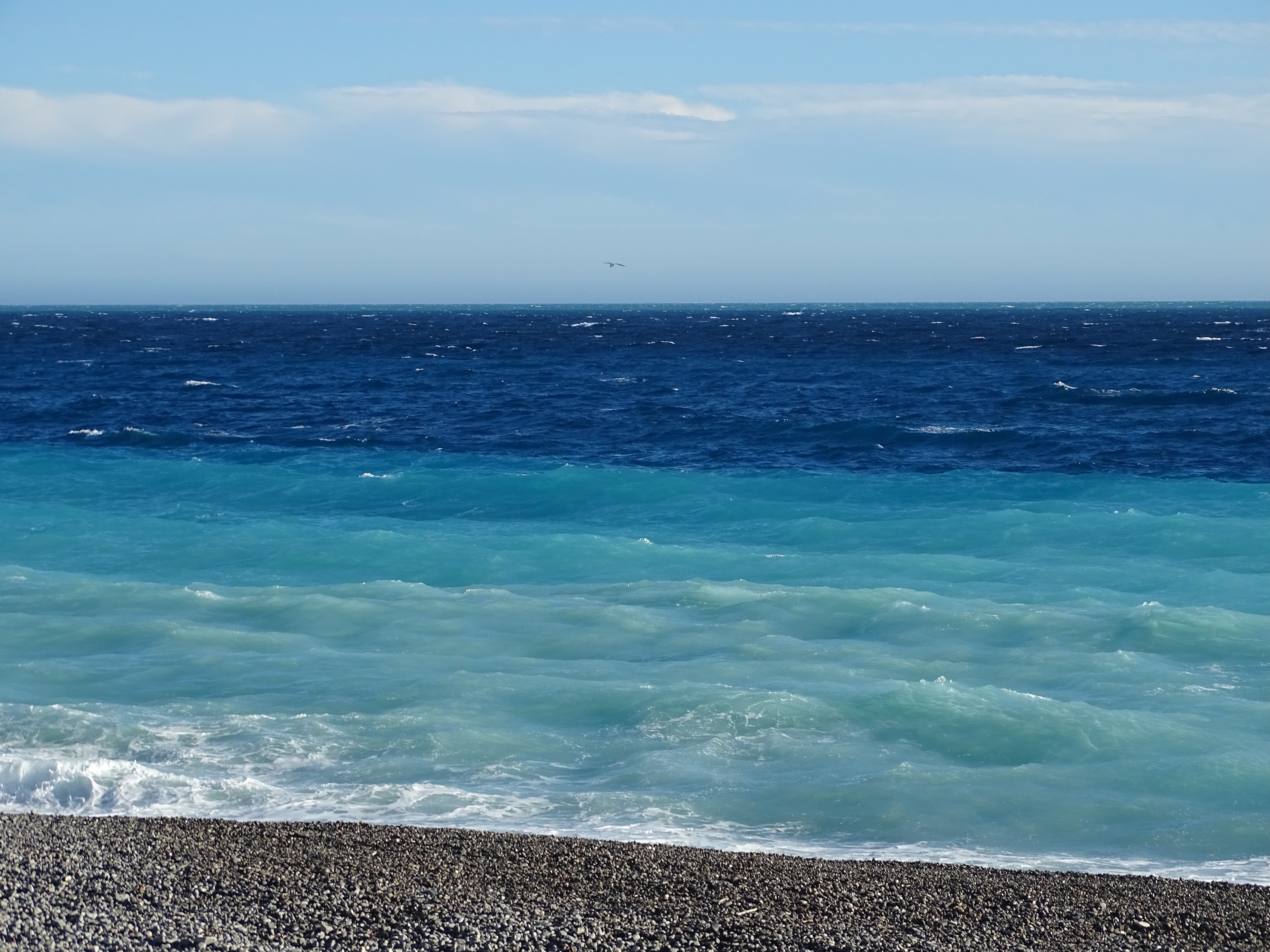
Blue.  The first thing that struck me about Nice was its blue.  The blue of its sea.  Deep, rich, silky, alluring blue.  I never knew blue could be warm.  The blue sea in the Baie des Anges.  Swathes of aquamarine and apatite, glimmering in the almost blinding golden light that kisses every nook and cranny of Nice.  A blue that converses with the cyan and cerulean sky.

As a child, I believed it was called La Baie des Anges because angels came to bathe here.  Only these anges weren’t angels, but a kind of small shark with fins that resembled angel wings.  They’d get caught up in fishing nets.  Not sharks enough to be be survivors, not angels enough to be kept safe, men had the better of them.  Anges, the fishermen called themAngelsharks. 

A blue sea that is also a bridge between two continents.  A treacherous bridge for those who, like the past anges are also caught up between two worlds.  In danger in one, unsafe in the other.  A blue of sorrow and hope and sorrow and hope.

A blue textured with stories.  A blue that shapeshifts into a myriad water dragons that ripple towards the shore and breathe out a flurry of mother-of-pearl foam onto the grey beach, before retreating with a loot of  shingles that ring as they are swept into the sea.  A ring like a giggle.

A blue you can talk to, because you know it knows so much more than you do, has secrets you could never fathom.  A blue you can confide in, bathe in, drink with your eyes, breathe with your mind.  A blue that cleanses every cell in your body and fills your soul with possibilities.  A blue with magic in its weave.

I stand at the edge of this blue, and tune into its rhythm.  To the waves that bubble towards my feet, to the sound of the backwash, with the tinkling pebbles.  I introduce myself politely, let the apatite and aquamarine dragons study me, decide if they wish to trust me.  Not wishing to be an empty-handed guest, I tell them my stories.  Then I wait.  Wait for the blue sea to speak to me.

Scribe Doll

Posted in Postcards from Nice | Tagged , , , , , , | 8 Comments

Goodbye, Chocolate Notes. Goodbye, Norwich. Goodbye, England.

I push open the door to Chocolate Notes and make a deliberate effort to take in the white floor with the swirly scores, the dark wooden tables and chairs, the shelving packed with CDs.  Fiamma and Jan give me a warm smile from behind the polished counter.  Faces and smiles I want to remember always.  Just like I want the sound of Vaughan Williams’s English Folk Song Suite playing through the speakers to permeate into every cell in my body.  I want this moment to be forever stored in my mind and heart.  It’s my last visit to Chocolate Notes.

“Lovely to see you.  How are things?” Fiamma says gently and I am grateful to her for sparing me the now customary “All packed up then?” fired at me by all my Norwich friends and acquaintances for the past few weeks, in that flippant tone used by people who are settled, rooted, and have no inkling of the stress involved in moving as often as I have.

“I feel like I’m losing my my mind.  Honestly, I don’t know what planet I’m on.  I’m just a packing machine on automatic pilot.  There’s still so much to sort and box up and I worry we won’t be ready by the time the removers come.”

Both travellers from other lands, Fiamma and Jan give me a look of deep understanding.

I should be at home, opening and emptying more cupboards and drawers, tearing more parcel tape, labelling more boxes.  But I need a break.  Even more, I need to spend a half hour with people I’ve come to consider my friends.  People who are pleased to see me, easy to talk to, who accept however little or much information I give them without judgement, prying or leaping ahead to complete my sentences (incorrectly), without feeding my words to the next customer eager to amplify them or change them before passing them on in turn to the next Norwich resident.  Many a time over the past ten years have I been told by acquaintances and so-called friends episodes from my life that bore as little relation to reality as 1950s American films were faithful to literature classics.  

In a city where, in ten years, I failed to find my niche, Chocolate Notes has been my safe place, somewhere I can be myself and let my imagination run free.  A multilingual, multicultural place with wonderful music and sparkling conversation, where patrons introduce themselves and their companions to you, invite you to share their tables when the café is crowded.  A world of colour and imagination and one which, unlike other independent Norwich coffee shops, stays open until late.  A classical CD shop that filled the void left by the closure of Prelude Records, in St Giles Street in 2017.  Last, but not least, a café that serves a wide variety of hot chocolates – none cloyingly sweet.

“Big move, takes it out of you,” Jan says softly.

“My thirty-ninth house move, fifteenth to another city, ninth to another country.”  

“Find a table,” Fiamma says, “we’ll bring you your favourite.”

It takes a friend to know when you’re mentally, physically and emotionally too exhausted and disorientated to make even the smallest decision, and step in with warmth and support.  I’ve been sleeping four-hour nights for several days, my brain is foggy, my body feels like that of a Hanna Barbera cartoon character that has been mashed, mangled and pelted.  The sound of stretched parcel tape is an earworm in my head.  My fingers are streaked with tiny scratches from making up cardboard boxes.  I obey gratefully, drift to a table by the window, drop my rucksack on the floor and myself on a chair.  

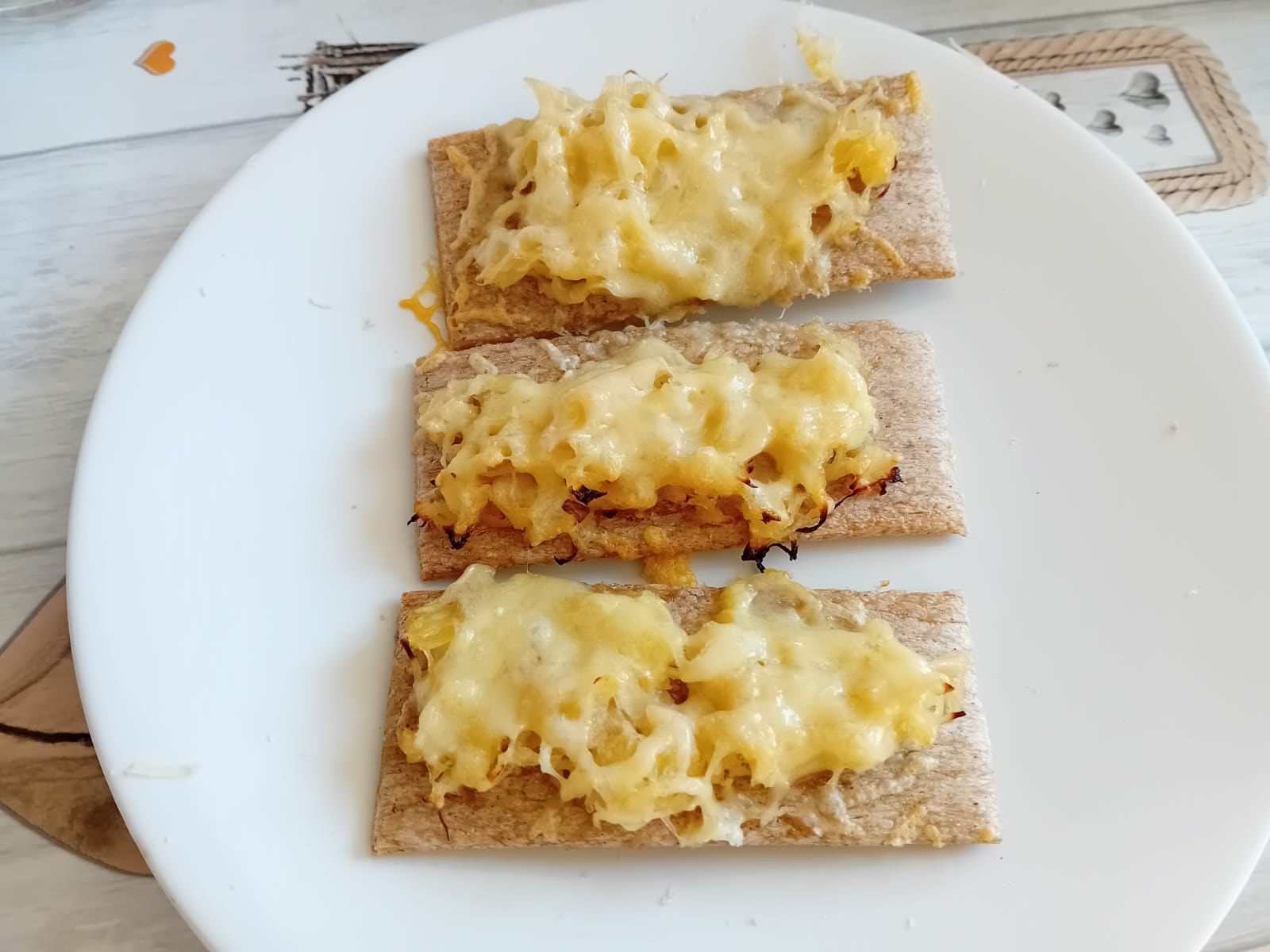
Within minutes, there is a cup of my favourite hot chocolate – sweetened with Algerian date syrup and spiced with fragrant cardamom – and my favourite snack: buckwheat crispbread with hot sauerkraut and grilled Comté.  Friends remember what you like.

Before I’ve even had a sip of the delicious hot chocolate, I see Fiamma and Jan occupy the chairs at my table.  Each has a hot drink.  “May we join you?” Jan says, although they both know I’m delighted by their gesture.  Friends saying goodbye.

“I’ll call you if I have a concert in Nice,” Fiamma says.

“And if there’s an unmissable history of art event,” Jan adds.

“You could always write a paper on Dufy,” I reply to him.  “There are a few beautiful specimens at the Musée des Beaux-Arts.”

“Or else we’ll all meet in Paris, as Chrystelle says,” Fiamma says, laughing.

“Where is Chrystelle?”

“She’s away in Paris.”

I’m sorry I won’t get to say goodbye to young, quirky Chrystelle.  There is always someone you can’t say goodbye to when you leave.  Something to look forward to on my next visit to Norwich.

*   *   *

And so goodbye Chocolate Notes and Norwich, and thank you for the past ten years.  

Fare thee well, England, and thank you for the past forty years.  I will miss your choral evensongs, particularly at Norwich Cathedral, your tempestuous winds, and your shapeshifting East Anglian skies.

Hello, France…    

Sauerkraut and Comté snacks

❧ Buckwheat crispbread

❧ Sauerkraut

❧ Comté cheese

❧ A tiny bit of butter

Heat the sauerkraut with the butter and arrange on the crispbreads, cover with grated or sliced Comté.  Grill.  Serve.

Posted in Feasts & Fancies, Uncategorized | Tagged , , , , , , , , , | 29 Comments

Saint George’s Day @ Chocolate Notes

(23 April 2024)

One of the local pubs is displaying white flags with the red cross of Saint George.  I suddenly feel the need to be in an international environment and can’t think of a better place than Chocolate Notes, owned by a globetrotting viol player who employs a Flemish and a French assistant.  I’ve never much liked Saint George’s Day in England.  The cynic in me scoffs at this date so conveniently coinciding with Shakespeare’s birthday.  Moreover, I dislike the jingoism it brings out of the woodwork; just as I wince at the sea of Union Jacks waving to the tune of Rule, Britannia at the Last Night of the Proms.  England has precious little to boast about at the moment.

In Italy, every city honours its patron saint with a day off.  Here, the patron saint of an entire country is marked chiefly by English flags here and there and an over-consumption of beer.  The bank holiday stinginess of this country extends to its patron saint.  But then it would be un-Protestant to draw too much attention to a saint – or to have an extra day off work, for that matter.

The figure of Saint George has never been simpatico to me.  Even as a child, I found the image of a clearly distressed dragon being pierced by the lance of a knight very disturbing.   Like all Western-raised children, I was told fairy tales in which the dragon was the evil monster and the knight who slew him a hero to be cheered and rewarded.  The innate contrarian in me has always felt sorry for the hapless dragon.  From what I could see, here was a poor animal being slaughtered for merely doing what its nature and instincts commanded: to breathe fire and eat humans.  Killing dragons made no more sense to me than hunting down a shark for attacking a human or harrying a bear for scaring humans on what is, by the laws of nature, non-human territory. 

The dragon’s ability to spew fire added to its fascination in my eyes.  

In Chinese folklore, the dragon is very much a male energy.  In English, on the other hand, the word “dragon” is often used as an insult for a strong-minded, strong-willed woman.  In the English collective subconscious, does Saint George kill a mouthy, headstrong woman? In any case, he slays a beautiful, powerful creature and, worse, he destroys a symbol of magic.

My interest in dragons was developed further when I started studying Qi Gong.  The first form I learnt is called Dragon and Tiger and it is still one of my favourites.  I practise it at least once a week.  In this form, the Tiger represents the liver, the dragon the lungs.  It’s an exercise aimed at strengthening the functions of both organs and focusses on improving your breathing technique, and learning to channel your breath into every cell in your body.  One of the movements is beautifully and suggestively called Dragon soars to the heavens and brings back the pearl.  Interpret that as you wish, but it’s a highly energising movement.  In another form, swimming dragon is graceful and undulating.  It is your friend, your ally, a magical creature to treat with respect, to treasure and to harness – not destroy.  

In Chinese folklore, dragons are good figures.  Their snake-like, agile form is much more elegant than that of their lizard-like Celtic and Germanic counterparts.  Similarly, snakes are valued for their grace, their agility and their wisdom.  They are not the insidious, evil demons Western cultures have inherited from Judeo-Christian teachings.  

My Chinese doctor tells me that in Chinese folklore, snakes are small – and female – dragons.  

What if Saint George hadn’t killed the dragon? If he is a saint, an enlightened man, why does he not, instead, tame the dragon? We would then be so much more in awe of him.

In my mind’s eye, I picture an alternative Saint George.  He approaches the dragon and speaks to it sweetly.  He charms the dragon and inspires its respect and undying devotion.  The dragon willingly becomes the saint’s devoted servant.  And so magic is not destroyed but harnessed.  

I imagine the dragon lying at Saint George’s feet, the man’s hand stroking the creature’s large head.   Now that’s a Saint George I could admire.

Jan is behind the counter when I open the door to Chocolate Notes.  The warmth of the shop is comforting.  We haven’t had spring in Norwich yet.  It feels as though winter woke up late this year and is now flexing its muscles.  Late April, and I’m still in my down coat, hat and gloves.

Chocolate Notes is a Saint George-free area, a nationalism-free zone.  It has become something of a sanctuary to me.  

“Oh, it’s so nice and toasty here,” I say, thinking that this coffee/classical music shop is warmer than my draughty flat where Howard and I comment several times a day on how cold we are and I still type with lambswool fingerless gloves on.

“We try,” Jan replies, “for as long as Fiamma can afford the energy bills.”

Yes, the UK’s obscenely high energy bills.

Jan looks at me with a friendly half-smile.  “You look like you need some TLC.  I’ve got just the thing for you.  Find a seat and I’ll bring it to you.”

I join my hands together and give a small nod of gratitude.  Sometimes, friends are not the people with whom you socialise but those whose workplace you frequent.  “May I make a music request?”

“Of course.”

“Do you have the recording of Lang Lang called Dragon Songs?”

By the time I’ve draped my down coat over the back of my chair and taken my notepad and Faber Castell out of my rucksack, the piano notes of the first track of Dragon Songs are gushing out through the speakers and Jan appears with a tray.

“You’re a true star,” I say.  “What have you brought me?”

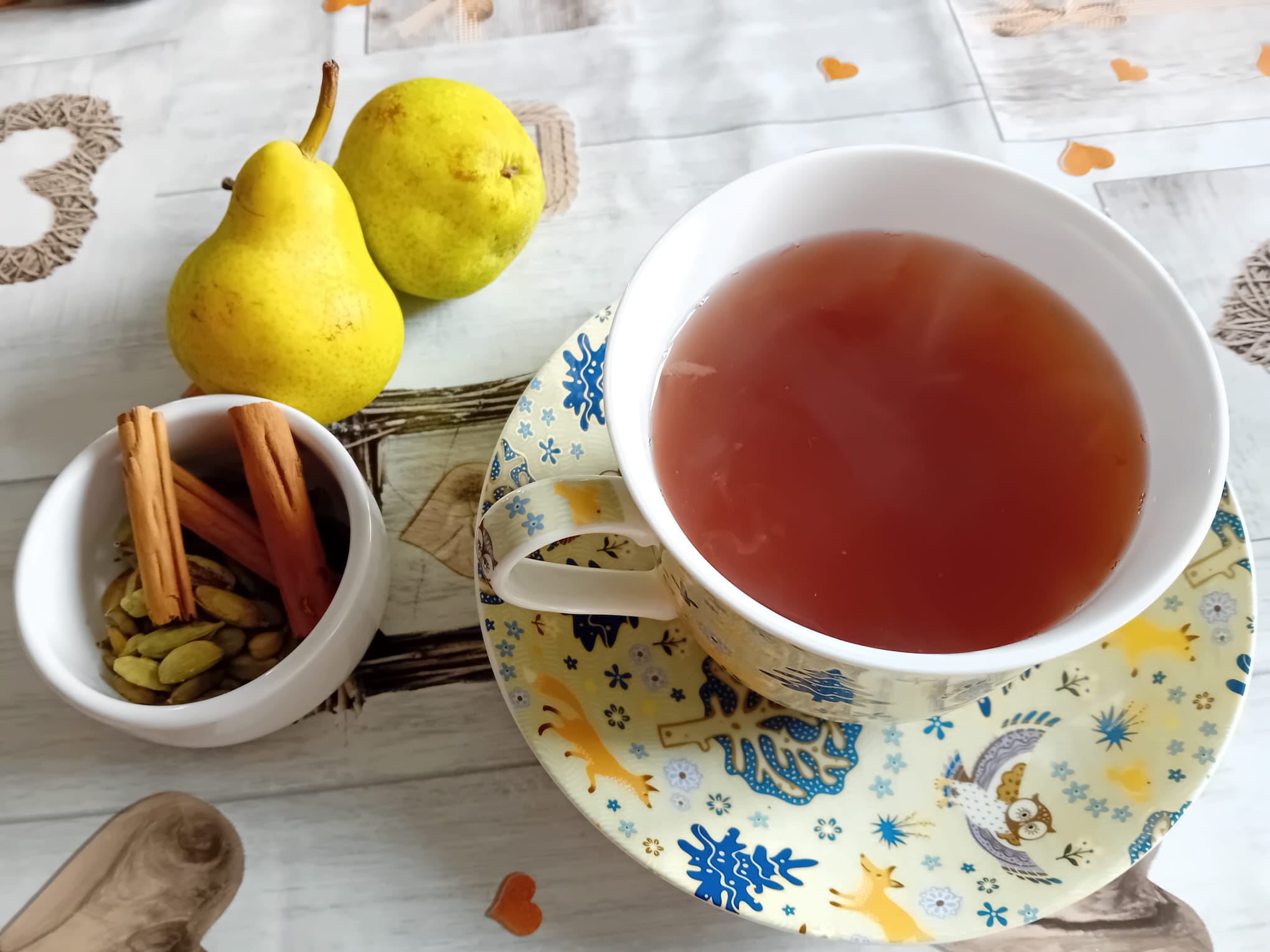
“Something I’ve concocted: pear tea with cinammon and cardamom.”

I take a sip.  The sweetness of the pear is complemented by the spice.  Jan’s right.  It’s just what I need.  

SPICED PEAR TEA

Ingredients (makes 2 cups):

❧ Two reasonably ripe pears

❧ 1 cinnamon stick

❧ 3-4 green cardamom pods, lightly crushed

❧ 1 litre water

Slice or chop the pears into a saucepan, add the spice and the water.   Bring to the boil then simmer gently for 20 minutes or so.  Strain before serving.  You can add a spoonful of honey if you have a sweet tooth. 

Posted in Feasts & Fancies | Tagged , , , | 4 Comments

FEASTS & FANCIES @ CHOCOLATE NOTES

Of Writers and Rice

I push open the door of Chocolate Notes and do a double take.  Two well-known, award-winning writers – one of whom I’ve met before – are sitting at one of the large corner tables.  After a moment of confusion (what are they doing in Norwich?) I remember that there’s currently some literary mini-festival at the University of East Anglia.  They’re holding court, wedged in by their agents (whom I also know) and surrounded by a few people I recognise as academics from the UEA.

I let the glass door swing shut behind me and catch the eye of the writer who recognises me, so I head towards the group. His stern expression softens.  It’s the closest I’ve ever come to seeing him smile outside his black-and-white publicity photographs, in which he invariably strikes a moody, sultry, tormented genius pose with the trademark designer stubble that now looks more white than grey.  

He stands up and we shake hands.  I exchange nods, smiles and circumstantial words with the academics and the agents.

He introduces me to the other author who, I can’t help thinking, looks like an ageing, well-fed tomcat, with his ample girth pushing against the commercial-white shirt and the lapels of his black jacket, his slow, languid gestures and the sleepy, bespectacled eyes that seem to notice everything around him.  Eyes that linger briefly, assessingly, on me, the corners of his full lips stretching in an effortlessly charming smile.  You can tell that he always smiles at women, that he likes women, at least for a while, perhaps as long as a cat enjoys toying with a shrew.

A few people shift to make room for me but I decline the seat with a wave.  I don’t wish to impose on their gathering, I say firmly enough so they don’t insist.  I can’t write about this scene or draw cartoons of the characters if I am sitting among them.

I shake hands again with the first writer and congratulate him on his recent novel.   Then I find a table a little further away, where I can scribble and scrawl unnoticed, and drop my rucksack on the chair.

Jan is behind the counter, feeding a CD into the stereo.  The wistful, passionate chords of strings and a piano ripple across the café.  I look at Jan – by now I no longer need to utter my question out loud.

“Gabriel Fauré,” he says, “Piano quartet in C minor.”

“Do you know those two writers at the large table?” I ask.

“No… but they look familiar.”

I give him their names.

“I thought they looked important.”

“They would agree with you.”

Jan laughs and the writer I know suddenly looks up, aware of being observed.  His sudden tension is palpable, like an animal on alert, his penetrating eyes, once like shiny obsidian, now a milkier grey, suddenly harden and a shadow of frustration falls over them  A falcon who knows he can no longer see all the way beyond the horizon.  

I feel a pang of certainty in my stomach: he thinks Jan and I are making fun of him and that makes him angry.  Angry and frightened.  His younger self could have slashed us with his talon, but now he can no longer balance on one leg.  He fears he might fall.

I feel a shade of guilt, smile broadly and step towards him again. “I was telling Jan how much I loved your Liquid Silence,” I say.

His eyes soften a little.  “Ah, that’s very kind of you,” he replies.  Reassured, he turns his aquiline profile back to his retinue.

I return to the counter.  

“What was that about?” Jan asks.

“Smoothing feathers,” I say, keeping my back to the group.  

“Are you stopping for lunch?”

“Yes.  What’s the special today?”

He points at the blackboard.  “All-Purpose rice.  What topping would you like with it?”

“I trust you,” I reply, returning to my table.  While waiting for my food to be brought to me, I watch – as discreetly as I can – the literary mini-court at the large corner table again.  A forty-something academic tosses her long, pre-Raphaelite red hair and cocks her head as she speaks.  The tomcat raises his eyebrows and smiles, his eyes widening behind his lenses.  Next to him, his agent, a tall, lean woman in her sixties with extra-long legs and blonde highlights in her bob, nods slowly while darting glances around the group, protecting her investment.  The other writer is making a point – a very comprehensive one – peppered, from what I can hear from a distance, with quotations from Classical authors and ancient Greek philosophers. He occasionally lifts a hand from his lap to massage his stubble, as though to underline his message.  His eyes are tired, his once suntanned skin a little sallow, but in the eyes of his audience, he is still the falcon that never misses his aim.  Next to him, his agent, a middle-aged man in a three-piece suit, listens with an expression of quiet benevolence.  He knows his prey can no longer fly away from him.

I am cruel, I know.  But this is all too good a tableau.  I take my sketching pad and my 2B mechanical pencil out of my rucksack.

✑    

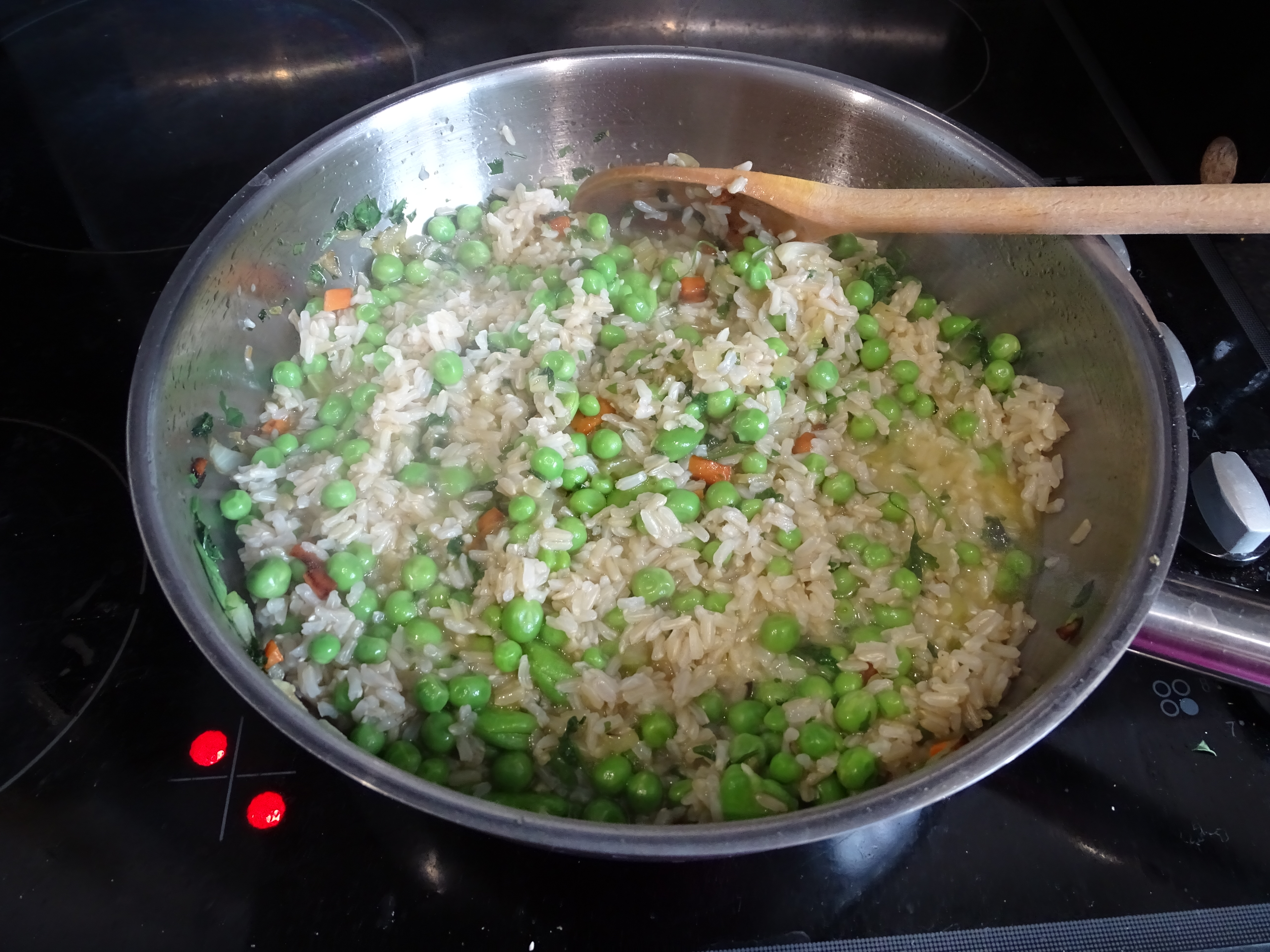
ALL-PURPOSE RICE

(all measurements are approximate, see https://scribedoll.com/2023/01/15/new-blog-feasts-fancies/)

Composition:

❧ Basmati rice

❧ Peas (fresh or frozen)

❧ 1 carrot, peeled and washed

❧ 1 small onion

❧ 2 celery stalks (washed) 

❧ Vegetable stock (see recipe)

❧ Salt and black pepper

❧ Extra-virgin olive oil

❧ Fresh flat-leaf parsley

❧ A dash of white wine (optional)

Chop the onion, carrot and celery as finely as possible and cook in olive oil on gentle heat until soft and golden. Don’t rush, just stand there, stirring slowly, letting the flavours get acquainted and, once they’ve vanquished their natural shyness, commune.  Add the parsley, chopped coarsely, haphazardly.  Include the stalks – they’re flavoursome, too.

Throw in the rice (thoroughly washed), turn up the heat: it’s time for some action.  Stir briskly and coax the rice into absorbing some of the flavours of the vegetables.  Add a splash of white wine if you wish.  After about 5 minutes, start adding the vegetable stock a little at a time, still stirring.  Once all the ingredients are in the pan, add salt and bring to the boil.  Cook the rice the way you normally would.  Depending on whether you are using fresh or frozen peas, add them to the rice just a few minutes before the liquid has completely evaporated.  Start stirring again, to make sure the rice doesn’t stick to the bottom of the pan.  Cook until the peas are ready.

Serve with prawns, tuna fish or anything else you like – or enjoy it as it is.

Posted in Feasts & Fancies | Tagged , , , , , | 4 Comments

Feasts & Fancies: New Year’s Eve @ Chocolate Notes

The weather is true to this time of year in Norwich: undecided between rain and tentative sunshine, and temperature with mood swings.  A gust of warmth and coffee greets me as I open the glass door to Chocolate Notes.  And an unusually loud wave of Marc-Antoine Charpentier’s Pastorale de Noël.  

“Are you on your own?” I ask Fiamma, while removing my duck down coat, hat and scarf, and throwing them on a chair near the counter.

“Chrystelle’s in Paris with her family and Jan was supposed to be around, but as it’s been quiet in the past few days, I told him he might as well stay in Antwerp with his parents until after New Year.  Especially with all the Eurostar cancellations because of the flooding.”

It’s true that there are only a couple of tables occupied.  I wonder if Fiamma has turned the music up to fill the space.

“You and Howard going out on the town tonight?” she asks, her tone suggesting she already knows the answer.  

“No, no.  A quiet evening in.  We’ll be watching the fireworks from our windows.  What about you?”

“Piers is here for a few days.  For once, we’re in the same place at the same time.”

“So no going out either…”

“Absolutely not.  I’m a musician: I’ve been to many, too many New Year’s Eve parties…” She glances at her watch.  “As soon as I close here… I’m going straight home and not stepping out till I absolutely have to.”  Her large hazel eyes suddenly open wide with girlish excitement.  “Piers is cooking – and he’s brought a box of fireworks!” 

Piers is Fiamma’s other half and a conductor.  I haven’t met him yet.  

“Perhaps we’ll see them from our window!”

I’ve always enjoyed New Year’s Eve parties more in my imagination that in practice.  I’ve left a few either straight after midnight or even before midnight.  If I’m not having fun, I don’t stay.  Just like I can walk out halfway through a film or during the interval of a show if I’m not enjoying it.  There’s a part of me that still dreams of a New Year’s Eve party in some glamorous Venetian palazzo, black tie, evening dress, small live orchestra, dancing, crystal champagne saucers, golden fireworks mirrored in the black waters of the lagoon.  That kind of thing.  Or in the company of just a few very close friends in house in the countryside – as long as it’s a warm house (so probably not in England) – with an open fire, Baroque music in the background, gentle conversation, comfortable armchairs.  That kind of thing.  

In recent years, Howard and I have seen the New Year in quietly at home, with a nice meal, a bottle of good wine, and, as always, unparalleled excellent conversation.  And cake. 

Oh, I forgot to make cake yesterday. 

“What would you like?” Fiamma asks.

“A hazelnut hot chocolate, please.  And… I’ve just realised, I forgot to make a cake for Howard and me for tonight.”

“Would you like one from here?”

“Oooh… That sounds promising.”

Fiamma pops into the kitchen at the back and returns with something in a brown paper bag.

“Heavens, that’s what I call efficiency.  What is it?”

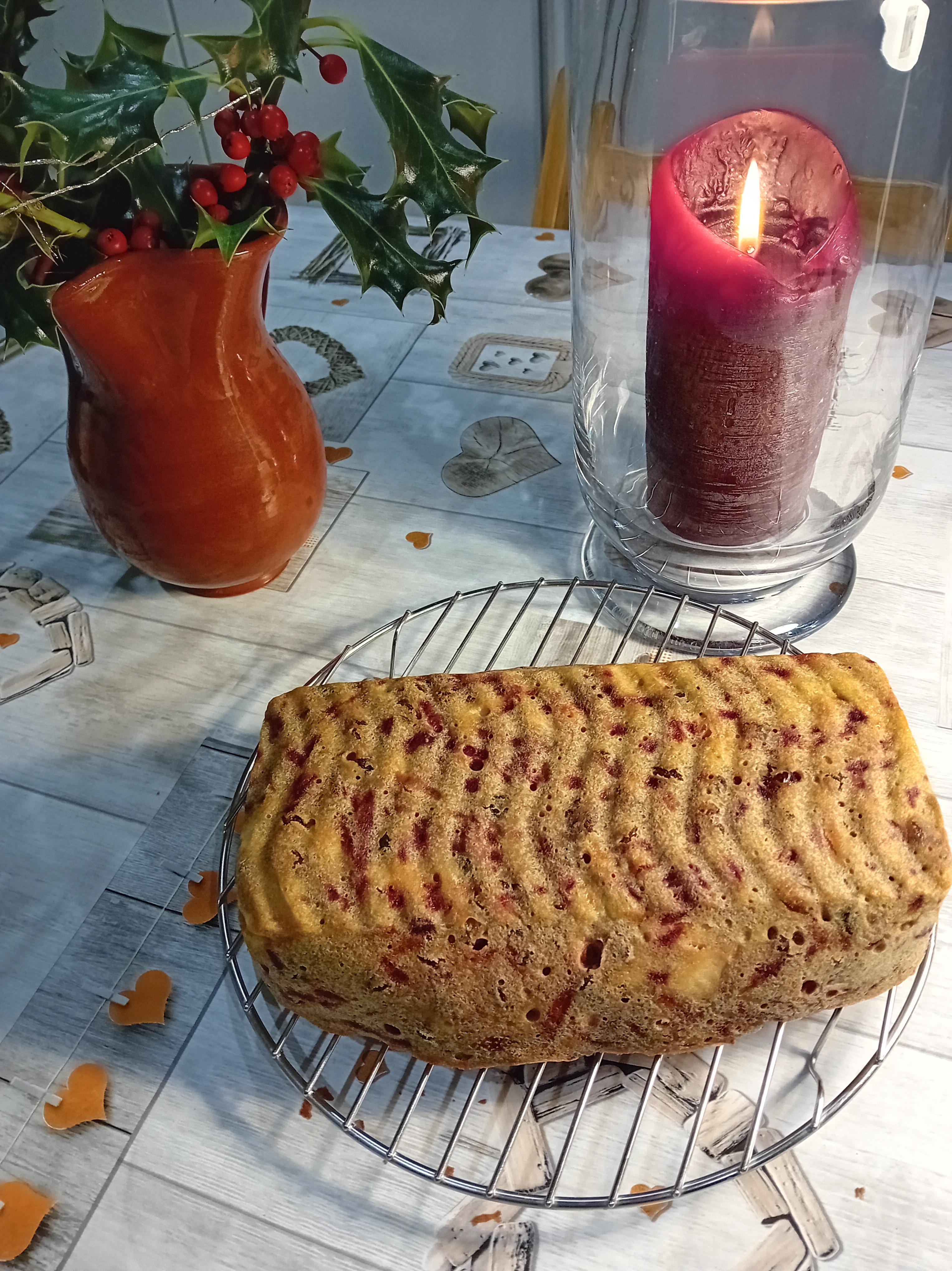
“Our signature Christmastide cake: beetroot and apple.  You have to have a red cake at this time of year.”

It certainly sounds original.  I reach into my rucksack for my purse.

“It’s on the house,” Fiamma says.  

“No, I can’t accept that –”

“Sure you can.  Besides, I’ll be closing soon and unless we suddenly have a coach party, I’ll have this as a leftover, and it’ll go stale. So do me a favour.”

She hands me the package, matter-of-fact, and smiles.  “Happy New Year to you and Howard.”

“And to you and Piers.  Thank you so much.”


BEETROOT AND APPLE TEA LOAF

Because for Christmastide, a red cake is the thing.

(all measurements are approximate, see https://scribedoll.com/2023/01/15/new-blog-feasts-fancies/)

You will need:

❧ 2 eggs

❧ buckwheat flour (as much as needed)

❧ 1 small peeled, washed and grated beetroot

❧ Sultanas (as many as you like, since they will be the only sweetening ingredient)

❧ 1 peeled and finely sliced russet (or red) apple 

❧ Milk (enough to make the cake mixture of the right consistency)

❧ Salted butter, melted

❧ Rapeseed oil 

Mix it all, make a wish for the New Year, bake and enjoy.

A happy, healthy, wealthy, creative, peaceful and beautiful 2024 to you all!

Posted in Feasts & Fancies, Uncategorized | Tagged , , , , , , | 2 Comments