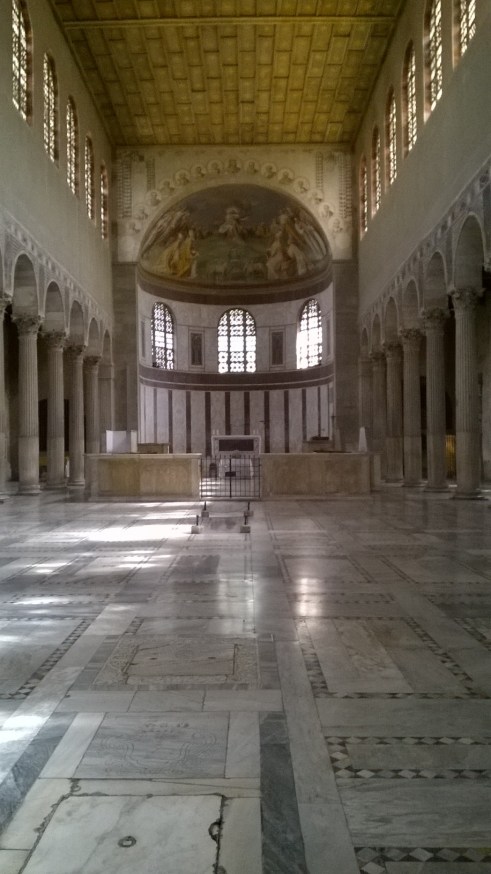
H. and I have just come back from a two-week holiday in Rome. We left Great Britain, we left the United Kingdom, and have come back to Little England, with everything this implies. For the first week after the Referendum, the first thought I woke up with every morning was that it had all been a far-fetched, stupid dream. We would get up, have breakfast, stroll in the blazing Roman sunshine then, once the holiday was over, go back home. Home. But as we got up, had breakfast, and read the newspapers and Twitter feed on my iPad, we went for a stroll in the blazing Roman sunshine with icy unease in our hearts. Home. Would England still be home?
I am not a devotee of the European Union as such, but I am a European to the core, and, as a result, I feel that the European Union is the best option in an imperfect system. I can’t claim to be politically all that well informed. However, when I saw the encouragement Brexit would give the extreme right-wing, anti-immigration, at times xenophobic factions rising throughout Europe, there was only one way for me to vote in the EU Referendum, and that was to Remain a part of the EU.
My British father (with some Cornish and Welsh) played no part in my growing up. Other than a blood connection, I had no legal or moral claim to Britain. When I first moved here from Rome, aged nineteen, this country couldn’t have been more alien to me. Shops closing at 5.30 p.m., electrical appliances sold without plugs, first-class-stamped letters arriving the very next day, people under-dressing, under-eating and understating. And then there was the language. Language is not a birthright. My early childhood at an American school had been followed by nine years in the French education system. In my first week in England, I went to see Chariots of Fire, and had difficulty following. Colloquial, non-bookish English, was incomprehensible to me. Sarcasm, dished out by my landlady with considerably more generosity than food, was something I couldn’t see coming until I felt it sting like a paper cut. People seemed amused, though in a disapproving way, I sensed, by my American accent.
The first week, I cried a few times. The second week, I went to evensong at King’s, and fell in love with Cambridge, the dramatically changeable East Anglian skies, the flat Fens where the horizon is so low, the land seems to go on for ever and ever. So I decided to conquer myself a place on this island, and set out to work. I was determined to be accepted, to be at home here. Every evening, I sat memorising words from the Oxford Concise Dictionary. I made myself keep a journal in English only. I watched how people moved, how they spoke, how they dressed. I aped their speech, their accent, their cadenza, their tone. The way it rose and fell. I swapped my green MaxMara jacket for a gun-metal grey duffle coat, learnt to add milk into my tea, cycle on the left-hand side of the road, and the true intended meaning of the adjective “interesting”. I acted English… until I became English.
I’ll never forget the boundless pride and joy I felt, a few years later, the first time I went to see a Shakespeare play without reading it first, and understood it. Or when I directed a production of The Duchess of Malfi, and the actors asked me to explain some of the Jacobean language. Or when I got my first job teaching English as a Foreign Language, at a British Council accredited school, after qualifying at International House. I write in English, I translate from Italian, French and Russian into English. People ask me which language I think in. I laugh. I don’t think in a language but in concepts. Doesn’t everybody? Heavens, if my thoughts needed sentences in order to be formed, I’d be a really slow thinker!
I have lived in this country for over thirty years. I have loved it and felt at home here. To the point where I feel entitled to make lovingly sarcastic public remarks about its flaws.
I feel at home here, except for the odd hiccup, like a needle scratching a record, when somebody, in a shop or at a party, suddenly catches me unaware by asking, “What’s your accent?” Then, for a few minutes, I feel as though I am seen as a usurper, as someone who doesn’t really have a right to be here, perhaps even not entitled to speak English quite to this standard. But it’s only a few minutes of discomfort. Then I feel at home again. My accent is what betrays me. An accent that has been described as French, Dutch, Irish, American, Russian, but mostly – and unfathomably – as South African. Perhaps it’s the way I clip my consonants.
Other than the sticky accent issue, I can honestly say that I have never experienced any xenophobia directed at me. Some might say I’ve been lucky. I can only make a judgement based on my personal experience.
But now, in the light of the xenophobic episodes that have taken place since Brexit won at the Referendum, for the first time in over thirty years I feel anxious. As someone rightly said, it’s not that half the country is racist, it’s that the handful of racists so far muzzled by political correctness thinks it now forms half the country and consequently entitled to express its xenophobia without restraint. Poet George Szirtes wrote a very poignant article in The Guardian, yesterday, which illustrates how I feel. Unlike him, I am not a refugee. But I have started from scratch in more than one country, and more than one language. When I was nine, we moved from Italy to Greece. A year later, we moved to France. Six years later, it was back to Italy. When I was nineteen, I moved to England. I know what it is to learn a new language, new customs, new gestures, new ways of dressing, new ways of eating, new ways of thinking. I know what it is to shapeshift in order to survive. I know what it is to leave everything behind, sometimes through choice, sometimes not, and start from scratch. I do not want to be forced to do it again. Will I walk into a shop, one of these days, and will someone, upon hearing my accent, say something insulting to me?
We are, all of us on this island, originally from another land. Some of our Leave camp politicians seem to have forgotten that their forebears were immigrants or refugees, however many years or centuries ago.
We had a German exchange student at my college. One evening, while chatting over coffee in my room, he said, “When you’re German and people ask you where you’re from, and you say you’re German, you sometimes feel as though you should add, ‘I’m sorry’ because of our history.”
My friend, born in the 1960s, was no more responsible for the horrors connected with mid-20th-century Germany than I am for the 52% who voted in favour of Brexit, and yet many of us, rightly or wrongly, feel a share of responsibility in the actions of the countries where our blood – or at least some of our blood – comes from.
My worry now, is that, for the rest of my life, whenever people ask where I come from, I will bow my head and, with a heavy heart, reply, “Britain. Sorry.”
Sorry, my country was the earthquake that caused the hairline fracture that spread into a crack, then a crevasse across Europe, shattering something which, with some reforming, could have been a truly creative, fruitful, and, above all peaceful union of countries.
Scribe Doll
*Please also see:
https://scribedoll.wordpress.com/2013/01/20/the-british-obsession-with-accent/
http://www.independent.co.uk/news/uk/home-news/brexit-eu-referendum-racial-racism-abuse-hate-crime-reported-latest-leave-immigration-a7104191.html
http://www.theguardian.com/politics/2016/jun/26/racist-incidents-feared-to-be-linked-to-brexit-result-reported-in-england-and-wales?utm_source=esp&utm_medium=Email&utm_campaign=GU+Today+main+NEW+H+categories&utm_term=179242&subid=2346909&CMP=EMCNEWEML6619I2
https://www.theguardian.com/books/2016/jul/02/brexit-we-want-out-and-we-want-you-out
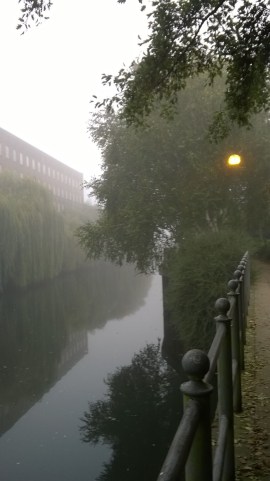 The night sky is growing pale when H. and I go out for a walk. A cushion of fog softens the contours of the River Wensum, the trees and the buildings, and throws a dream-like veil over the fiery autumn red, ocher and gold. There are very few people about and those we encounter smile and say good morning in subdued voices, as though we humans are all aware of being out-of-hours trespassers in what is left of a night that belongs to hooting owls, amber-eyed foxes, and witches making last-minute preparations for Hallowe’en tomorrow.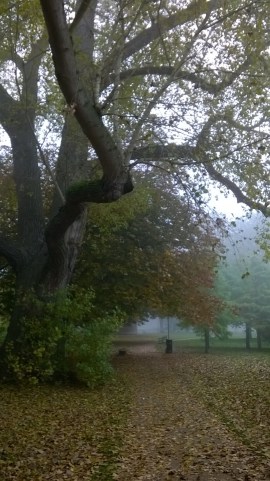


 Scribe Doll