“You can really tell if it’s Byrd or Tallis from the first few bars?”
H. likes some Early and 16th Century music, but is more of a Romantic and 20th Century man. He likes passion in music. I like post-white-ruff composers but need serenity and the reassurance that the world makes sense. So we meet in the middle, at J.S. Bach.
I know that, sooner or later, he will test me. My eyes dart around the room and I chew on the inside of my cheek. “Yes,” I finally reply.
It takes six months. Then, one day, he remembers and pulls out a couple of CDs from the shelf. I sit on the sofa, ready for my aural exam, somewhat anxious I’m about to fall flat on my face in a sticky puddle of embarrassment.
He plays the first few seconds of eleven separate pieces.
After a difficult week, the feeling of grey heaviness in my heart is immediately dispelled by the opening bars of George Gershwin’s overture to Oh, Kay! J. S. Bach reminds me that the world makes sense and Gershwin makes me happy to be alive in this world. The volume is higher than usual when I walk into Chocolate Notes* but I don’t mind. On the contrary, I let the joyful music wash the remaining cobwebs from my mind. Gershwin and a warm, sunny day. Who could ask for anything more?
There is a new face behind the counter. It looks like Jan is training a new bar person, a petite young woman with a short blonde bob and a strand of fuchsia hair that flops down from her side parting. Jan introduces her as Chrystelle. She is from Paris. A musician.
“What do you play?” I ask.
“The violin,” she replies with soft, narrow Gallic vowels.
I gather from the brief conversation that she has moved to Norwich because her husband has just started a Ph.D. at the University.
“Norwich. After Paris,” I say. “It’s quite a change.”
She smiles politely. I wonder how she is going to cope with the inevitable culture shock.
“And you?” she asks, “Are you from Norwich?”
“God, no!”
“How long have you been here?”
“Too long. Almost nine years.”
Jan takes two crisp white tea towels, hands one to Chrystelle and starts polishing the cups and glasses. He holds each one up to the light, rubs hard, holds it up again until he is satisfied that there are no smears or water marks. So Flemish, so un-English, I think. Chocolate Notes has to be the only café in the country where all the crockery and cutlery is always gleaming. No tea stains on the spouts of teapots, no dark patches in the crooks of cup handles. I remember with nostalgia the pleasure of impeccably clean tableware in restaurants and coffee shops in Brugge, Antwerp, Ghent, and in the rest of Belgium. But also in Paris, in Rome, in Milan. I also think of the Norwich gastro-pub where I once ordered plain hot water and when I poured it, tea leaves fell into my cup. “I think someone forgot to wash the teapot,” I told the publican. He examined the pot. “No, it’s been washed,” he said, straight-faced. “They just forgot to take out the tea leaves.”
Chrystelle also starts wiping the cups and glasses, her gestures a little slower, less experienced that Jan’s.
Jan looks at me. “You were going to tell me why you moved to Norwich.”
“Ah, it’s a long story.”
“You always say that,” he replies, a twinkle in his eye.
“You really want to know?”
“I’d like to know,” Chrystelle says.
I look at them and wonder if, once they’ve heard my story, they’ll think I’m mad, or if they won’t believe me.
London, winter 2013. It was as though I had fallen off the grid, as though I couldn’t find a spot for myself anywhere. I felt unnecessary, irrelevant and aimless. I had just walked out of a job where I was bullied, my cat had recently died, I had no home, so was staying at my mother’s, and I had used up all my friends’ goodwill and patience. No one wants to spend time with someone who doesn’t belong anywhere or knows where she is going. I decided to break this consumptive pattern the only way I knew: by leaving London, at least for a time. It’s not true that running away doesn’t solve problems. Sometimes, a change of scene allows you to get a panoramic view of your shortfalls, your errors, and give you the required distance for reinventing yourself and forming new habits. Above all, new places can often offer new ideas, and so new hopes.
I studied my Penguin Map of the British Isles. It had to be a city within two hours of London by train. It had to have beautiful, old architecture. And a church with a professional choir, where I could go to evensong and watch the notes of countertenors float up to the stained-glass windows.
I drew up a list of seven options and wrote the name of each on a small piece of paper I then folded several times. Oxford, Cambridge, York, Norwich, Winchester, London (just in case I should stay), Other (what if there was a place I hadn’t thought of?). I threw the folded bits of paper into a mug, covered it with my hand, shook. With my eyes closed, I took out one, unfolded it. Norwich. I had only been there once, for a weekend, a few years ealier. All my life I had acted rationally, cerebrally. It clearly hadn’t paid off. What did I have to lose by taking a gamble on an impulsive decision?
I packed two suitcases. One was filled with dictionaries: two days before departure I’d signed a contract for my first ever literary translation. An actor friend had put me in touch with his wife’s cousin, who had a room to let in her house in Aylsham Road.
It was Shrove Tuesday, it was freezing. A ruthless wind blew from the Urals, the locals told me. The Beast from the East. I started on my translation, I took walks in a city where there was hardly a human to be seen in the streets after 7 p.m. A city where coffee shops closed by 4.30 and in some areas street lights were switched off at midnight.
I spent forty days in Norwich. Give or take. Then I returned to London and unexpectedly found a beautiful room I could afford, in a house occupied by nice people, in a lovely, leafy Wimbledon street, a short stroll from the Village. A couple of days later, I was offered two teaching jobs, with better pay than I had ever earnt and kind employers. Three weeks later I attended a masterclass in translation and met my husband, Howard.
And so Norwich became known as “the re-set button” as my friends called it. A year or so later, as it became painfully apparent to Howard and me that we could no longer afford London rents, I said flippantly, “There’s always Norwich.”
Howard looked up from his dinner plate. He didn’t laugh.
“I pulled Norwich out of a mug,” I tell Jan and Chrystelle.
The glass polishing stops and they both stare at me.
“All right then. Here we go… It was in February 2013, I had been living in London for nearly twenty years and, for various reasons, things weren’t going well and I decided to move to another city –”
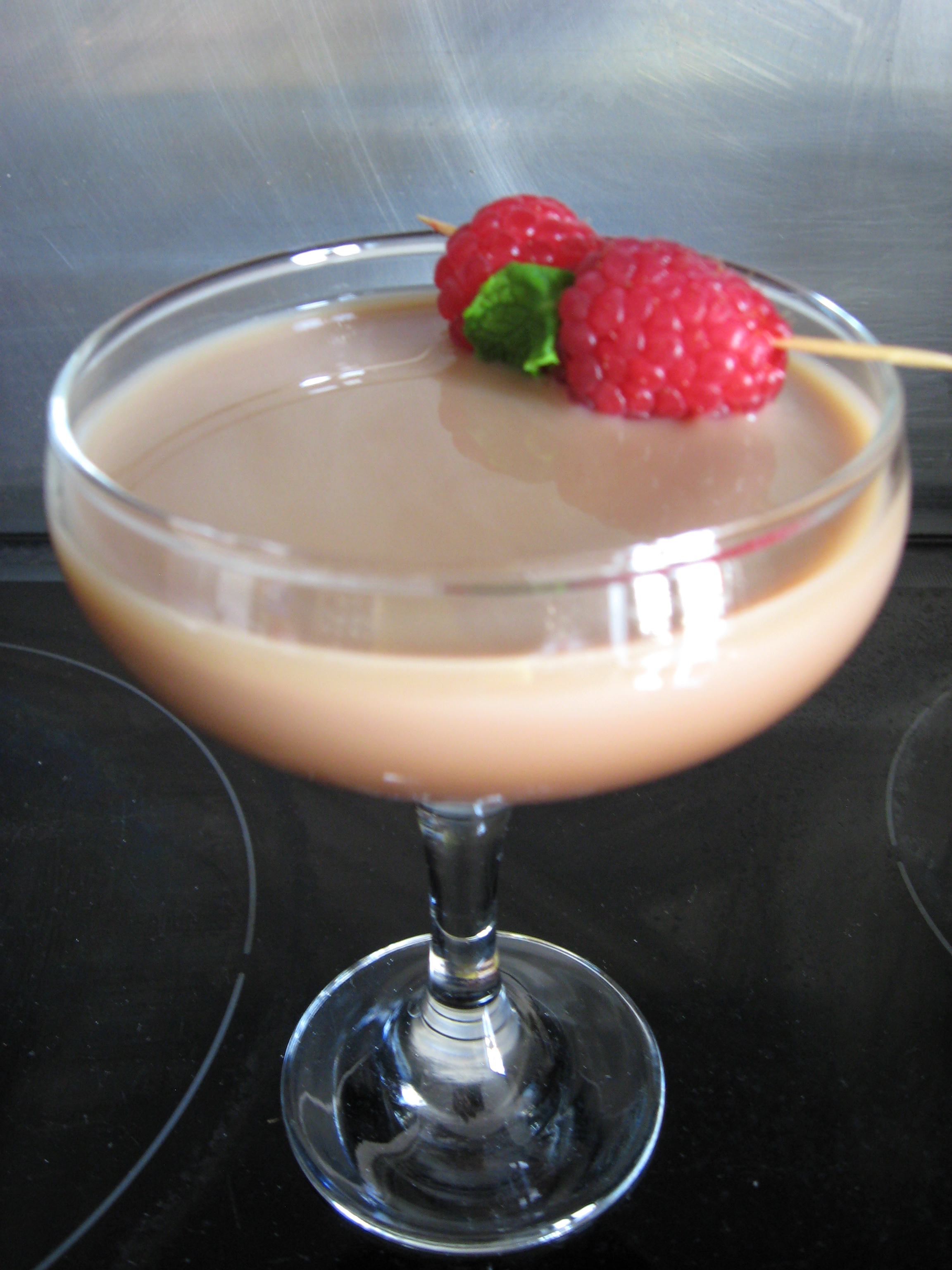
“Wait,” Jan suddenly says. “Sorry – before you start – would you like a new concoction of mine? A Chocolate Cocktail à la Menthe?”
I nod enthusiastically.
“We’re all ears,” he says, producing a sparkling champagne saucer from under the bar.
Wash the mint and bring to boil in a pan, then simmer on very low heat for about 20 minutes. Remove from the stove, stir in the sugar and cocoa, allow to cool, then refrigerate for a couple of hours. The longer you leave it, the stronger the mint infusion, so it depends on how minty you want your cocktail.
Strain into a suitable serving glass, champagne saucer, or cocktail glass and add a swirl of oat cream and a couple of ice cubes (optional). Garnish with fresh raspberries and mint leaves.
A group of us meet at Chocolate Notes* every New Moon to tell a story. When the New Moon happens to be on a Sunday (when the CD shop cum café is closed), we meet on the evening before or the one after. If it’s not too crowded, and Jan is there to help out, Fiamma joins us. We’re still trying to persuade Jan, but he does that little wave of his, his long fingers undulating like those of a ballet dance or a QiGong practitioner, and protests that he is a visual, not an auditory person. I guess that explains his passion for painting, sculpture and architecture. I’m still not entirely sure what his Ph.D. thesis is supposed to be on. I know it has something to do with art. I really must ask one of these days when he’s not busy and we’re chatting.
Fiamma, on the other hand, however much she may insist that [she is] a musician, not a wordsmith, she is a natural storyteller. Her Basque ancestry infuses her tales with elemental entities, and, more often than not, she manages to weave a Basajaun (the wild man of the woods) or an Iratxoak (imp) into the tapestry of our plot.
Our small group (affectionately self-christened Weavers & Spinners) is made up of literary translators. Translation is a solitary profession, so something of a social life is important to remind you that you are a social creature. Moreover, even if you love translating, it can be frustrating, if not repressing, for those with a burning urge to write stuff of their own. After all, you do spend all day writing, only it’s writing in someone else’s voice, channelling someone else’s emotions, unravelling someone else’s thought processes, living in someone else’s head. And that’s before the copy editor – an outsider who has not lived in close mental-emotional intimacy with the book – charges in with their opinions, motivations and intentions for you to deciper in Track Changes. Literary translators are authors, yes, but – and this is the crucial difference with writers – we do not start with the freedom and possibilities of a blank page; we have a text to guide us (when we’re lucky enough it’s actually written well enough to guide us), and this guidance can, on occasion, feel like a leash.
Speaking for myself, no matter how determined I am to work hard on translation all day so that I can reward myself in the evening by doing some writing of my own, by the time Big Ben chimes in the 6 p.m. news on BBC Radio 4, I am like a ventriloquist who can no longer remember how to produce my own voice.
All that to say that one of the Weavers & Spinners house rules is, during our monthly meetings, not to mention translation. These New Moon evenings are all about our own storytelling skills, our own voices.
We always sit around the table in the corner furthest away from the counter. There is a framed sepia photograph of Gabriel Fauré as a student hanging on the wall next to it. Once we are all gathered, we decide who is to begin. That person starts telling a story. This can be a first-person account of something that happened to him or her that day, a ghost story, a fairy tale or whatever takes the speaker’s fancy. The narrator speaks for a few minutes, then passes the storytelling baton to the next person, who continues the story before nominating their successor, and so forth.
Depending on the evening and on how many members turn up (though it’s rare for someone to miss this monthly get-together), we generally go around the table two or three times, while Jan fuels our inspiration with a range of hot chocolates. Towards the end of the evening, Fiamma has so far never failed to leave the table for a couple of minutes, go into the kitchen behind the counter and bring us back something to nibble on. So far, she has also always refused to add these snacks to our bill.
Last month, when the temperatures hinted at a possible, albeit timid, start to summer, Fiamma came out of the kitchen and placed in the middle of our table a bowl with a yoghurt dip, standing on a large plate with crispbread and polenta strips.
The next New Moon is tomorrow. I don’t know what treat Fiamma will spoil us with this time. We Weavers & Spinners are taking her a large bunch of pale rose peonies.
YOGHURT DIP
A Greek-Armenian-inspired dish developed over the years.
❧ Full-fat Greek yoghurt (the real stuff as far as possible)
❧ Carrot
❧ Cucumber
❧ Garlic
❧ Fresh tarragon
❧ Fresh mint
❧ Extra-virgin olive oil
❧ Salt
❧ Sultanas
I have not specified any measurements here because you can choose the proportions of ingredients depending on your taste. Dried tarragon and mint can be used instead of fresh.
At the bottom of a large-ish bowl (there will be a lot of stirring to do), sprinkle a generous pinch of sea salt and pour a couple of tablespoons of olive oil.
Crush the garlic (or chop it very finely), chop the herbs, grate the carrot and dice the cucumber as finely as you can manage. Throw everything into the bowl, adding as many sultanas as you like. The sweetness of the dried fruit counteracts nicely the heat of the garlic. Stir.
Spoon in the yoghurt, stirring as you go along. Try a little to see if you need to add any ingredients.
Serve with celery sticks, carrots, crackers, toasted pitta bread, tortilla chips or, like in the picture, boiled polenta which is then spread thinly on a baking sheet and roasted in the oven.
It’s always difficult to find a table on a Saturday evening, but this time Chocolate Notes is positively heaving, so much so that you can barely hear the aptly chosen New London Consort recording of Carmina Burana over the hubbub.
There is a distinct group around the largest table. Mostly young and middle-aged characters: sculpted quiffs, large glasses with square frames, jeans down to the hips, flower-patterned skirts, lipstick that probably glows in the dark, leather jackets, and a fellow in shorts and flip-flops, apparently dressing to the calendar and not the weather. A colourful sample of ages, genders, fashionistas and anti-fashionistas with a communal expression of moody earnestness in their eyes.
The conversation seems to revolve around an elderly, slender, bespectacled man who is illustrating his point by tracing invisible horizontal and vertical lines with the glass of orange juice in his hand. He is holding court, conducting adroitly his entourage’s attention. Whenever it wanders a little too far from him and flatters one of the younger members of the group, he summons it back by dropping his voice, so everyone has to hush and huddle around him closer, for fear of missing a word.
I finally catch his eye, give him a little wave and receive a confident “Hello, Katia!” in return. Several pairs of inquisitive eyes immediately focus on me and look away just as quickly when they realise that I am not going to approach to pay homage to their leader.
A movement in the corner of my field of vision distracts me. It’s Jan’s arm waving at me from behind the counter, his other hand pointing down at a vacant bar stool. I smile and hold up my thumb. “Thanks, Jan,” I say, taking off my jacket and draping it over the back of the stool. “I see the town’s poets are in residence.”
Jan’s blonde eyebrows rise as far as they will go.
Every tourist is told that Norwich has a church for every week of the year and a pub for every day. The residents soon discover that it also has a poet for every hourly chime of the Cathedral clock.
I turn my head to observe the group of verse writers again. A youngish woman in the flower-patterned skirt is telling a story, but just as her tone suggests she’s nearing the punchline, the elderly man completes her sentence with a quip of his own and reaps the ensuing, by now matured, burst of general laughter. The youngish woman with the flower-patterned skirt laughs along, but looks a little crestfallen.
Fiamma’s tall frame and mane of fiery hair step out of the back room. She is carrying a tray of freshly-baked cantuccini. Never mind the poets — this truly is worthy of attention. “Are these the ones with almonds or pistachios?” I ask, inhaling the comforting fragrance of the biscuits.
“These are with pistachios,” she says, a crafty glint in her hazel-green eyes. She puts the tray into the glass cabinet, assesses the atmosphere in the room and turns up the stereo. The music swells and the Mediaeval hurdy-gurdy fights back to dominate the café, its zany, jocular notes jesting with us all.
I take out my notepad and pen. Jan looks at them. “Your novel?”
“No, not this evening. I’m just jotting down a few ideas.”
Jan squints at the menu board. “In that case… Cinnamon cocoa?”
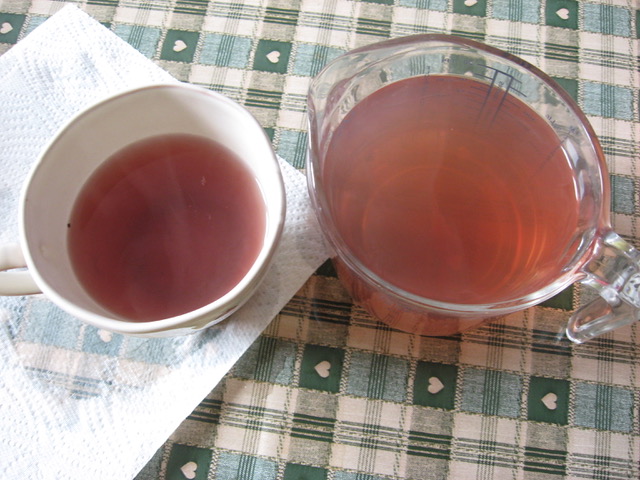
Put the cinnamon stick half into a pan of enough boiling water to fill 2 ½ cups/mugs/glasses, slowly bring to boil and simmer ever so gently for 15-20 minutes, until the amount of water left in the saucepan is enough to fill almost – but note quite – 2 cups/mugs/glasses. If the water boils out too quickly, add some. You know you’re in for a treat when the fragrance of cinnamon fills the kitchen and wafts into the neighbouring rooms.
Strain the resulting red liquid and throw away the cinnamon.
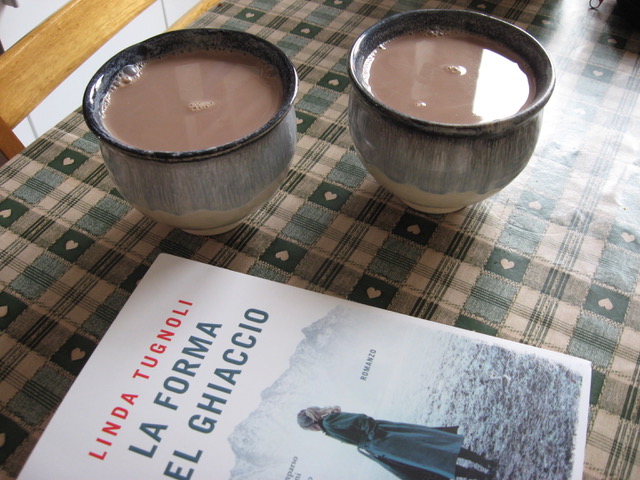
Put the cocoa and date syrup into the pan and place the pan back on the stove. Gradually add the hot cinnamon water, stirring continually. Slowly bring to boil again and let simmer for a couple of minutes.
At this point, you can either add the oat cream and continue heating the mixture for a few more seconds before serving, or pour into the cups and then add the cream on top, whipped or poured over the back of a spoon, Irish coffee-style.
Dairy cream can also be used, although its rich taste is likely to drown out the delicate flavour of the cinnamon.
Sip slowly, ideally with your eyes half closed. Make a wish. Enjoy.
My mother didn’t particularly care for food. She seldom expressed any joy towards it and made sure I was trained to show no more than polite enthusiasm when praising a dish.
One of my early childhood memories is of being taken to audition for a voice-over job for Nutella, soon to be exported to the USSR. I was supposed to provide the Russian voice for a commercial.
I remember watching on a cinema-size screen a documentary about how Nutella was made. There were shots of machines stirring huge vats of glossy, creamy chocolate spread, of conveyor belts carrying empty jars that were then filled at regular intervals. Then I recall a tiring, laborious scene, off-screen, in which a man was asking me in Russian, over and over again, if I liked chocolate.
“Yes, I quite like it”, “It’s not bad” and “It’s nice enough” (in their Russian equivalents) were the most passionate responses he managed to drag out of me. Not because I didn’t like Nutella – I couldn’t wait to grow up and move out of the family home, so nobody would raise an eyebrow if I devoured it by the tablespoon straight out of the economy-size jar, instead of thinly spread on bread. Only my mother had taught me that it wasn’t refined or ladylike to express strong emotions about anything, let alone food. Food was to be appreciated with a je ne sais quoi that was a blend of remoteness and quasi indifference bordering on ennui. You never ever let on that you were hungry and, above all, you always gave the impression that your interests lay far, far higher than food.
Once, when the school child psychologist asked me, then age seven, what I’d had for dinner the night before, I responded coldly that I could not remember and that, if I might say so, I found his question rather personal.
And so, as the assistant or casting director or whoever was desperately trying to elicit a bright, Mmm… I love it! response, unquestionably loyal to my mother’s teachings, I maintained my I-can-take-it-or-leave-it, aloof, Grace-Kelly-playing-in-The-Swan poise, aristocratically unaware that I was sabotaging a rare opportunity to generate money for my financially-challenged family.
Predictably, as an adult, I did for a time eat Nutella with a spoon (a teaspoon, admittedly) straight from the jar. It was my go-to remedy for romantic disappointment, professional frustration and, very often, a reward for just about anything. That was as far as my sweet tooth went. Recently, though, I have developed a liking for unsweetened, 100% dark chocolate. It’s chocolate with attitude, that commands respect. I tell myself it’s not for the faint hearted. Like a doppio ristretto or a shot of grappa. Watch out, I’m a black chocolate eater: I’m tough, me.
Chocolate and chestnuts are perfect allies. My favourite ice-cream combination is gianduia and marrons glacés, only found, to my knowledge, in my favourite ice-cream parlour, Giolitti’s, in Rome, where it is served with a panache of whipped cream, in a tall glass, which the waiter in a white jacket places on the gleaming marble table.
Back in Norwich, however, I still like to combine chestnuts and chocolate in various recipes, this being one I improvised yesterday afternoon…
❧ 1 tablespoon extra virgin olive oil + enough to grease cake tin
❧ Grated rind of 1 orange
Whisk the eggs, then stir in the chestnut and buckwheat flours before adding the milk and the date syrup.
Chop the chestnuts and the chocolate coarsely and stir into the mixture.
Add the grated orange rind.
Spoon the mixture into a muffin/Yorkshire pudding tray. Bake at 200-220ºC for about 20 minutes.
A few notes:
I add the buckwheat flour only to make the chestnut flour go further. Traditionally the food of poor Italian peasants who could not afford wheat, chestnut flour in England is absurdly expensive. I mix it with buckwheat flour because the latter has a mild, unobtrusive taste, but wheat flour or rice flour would work just as well, though please note that wheat flour will make the consistency much heavier.
I often use olive oil in baking for only one reason: I am too lazy to beat the butter until it’s soft enough, and melting it on the stove would mean an extra saucepan to wash. Besides, olive oil gives the cake a je ne sais quoi I like. I used to keep sunflower oil for these purposes, but it kept going rancid, so I decided to stick to the green liquid gold.
Basically, I like cooking to be as effortless as possible.
“Bad table manners, my dear Gigi, have broken up more households than infidelity,” says the ageing Belle Époque courtesan to the niece she is training in the MGM musical based on Colette’s novella.
When I was six years old, I was poked fun at at my first primary school for refusing to eat my frankfurter without a knife. It was finally handed to me with a huff. Why couldn’t I just spear the sausage with my fork and bite it off, like the other children?
My mother and grandmother valued good table manners almost on a par with the knowledge of languages. “You never know where life may take you,” they would say, “good table manners are an extra passport”. And the more passports you had, the more doors would open to you, and that would give you more choices in life.
My grandmother was content with my eating performance being discreet, while my mother insisted I learn to use all the cutlery and glasses as illustrated in our copy of Debrett’s Guide to Etiquette and Modern Manners. For all my protestations that her social ambitions for me were way above our financial possibilities – why learn to eat at an aristocratic dinner party when we could never have afforded to buy me a dress that would allow me to attend it? – my mother would not relent. “You may never have the need to eat an apple with a knife and fork,” she’d say, “but there’s nothing worse than finding yourself in a situation, whatever it may be, and being unable to cope with it because you lack the appropriate skills.”
And so I learnt to eat an apple with a knife and fork, remembered to dab my lips with the napkin before reaching out for my glass, made sure I didn’t help myself to the communal butter with my own knife, but from the small piece on the side of my plate, which I’d served myself at the beginning of the meal, and kept pace with the other guests so as neither to wolf my food down before anyone else nor lag behind, etc., etc.
Most of my mother’s instructions were aimed at helping me be accepted wherever I might venture. “Always observe how the other people present eat before you start,” she’d say, “and, to a certain extent, do as they do. If you’re invited to a household where everyone eats sitting cross-legged on the carpet, you don’t ask for a chair.”
Looking back on my family’s teachings, I realise that all were ultimately aimed at avoiding at all costs sticking out or offending.
Table etiquette is far less prescriptive now than it was when I was a child, and I cannot remember the last time I used a fork to eat an apple. Perhaps I don’t revolve in high enough circles. I find it sad that table manners have become synonymous with class and wealth, when I feel they should be associated with a form of aesthetics instead. Why not eat beautifully, when you can, just as you would write beautifully, or walk beautifully, play a musical instrument beautifully or do anything else beautifully for that matter?
And, on that note, I dare you to eat the following beautifully…
❧ Reblochon (or, if wary of unpasteurised cheese, brie – or if you live in Norfolk, smoked Dapple works, too, but then leave out the dill)
❧ Fresh dill (herb)
❧ Extra virgin olive oil
❧ A large napkin (or two)
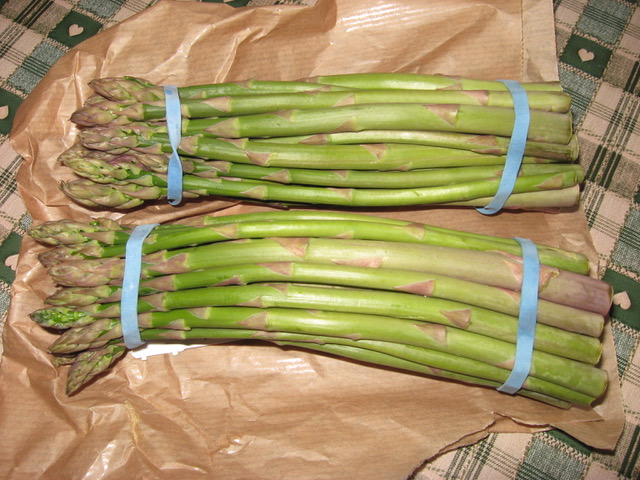
Wash the asparagus and break off the tough end of the stalks, then steam them (boiling takes away their flavour) until just soft enough to remain crisp: you don’t want mushy asparagus.
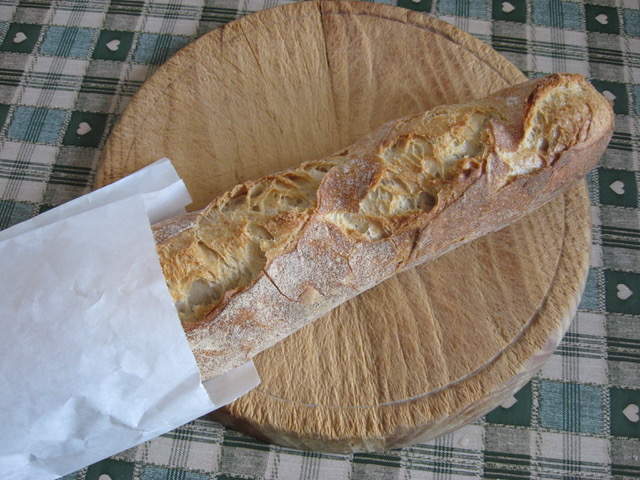
Cut the baguette either in long slices or down the middle and drizzle with a few drops of olive oil.
Wash and dry the fresh dill.
Heap a generous amount of reblochon (or brie) on the bread, arrange as many asparagus stalks on it as will fit and add a little dill.
Bite into the sandwich, avoiding any breadcrumbs, bits of cheese, threads of dill or drops of olive oil falling anywhere. Ha!
PS – Thank you to all those who wrote to me, asking why I hadn’t posted for the past couple of Sundays. I was very touched. The truth is I was in France for two weeks and, for once, didn’t take my laptop with me. Predictably, I shall soon be writing about la Douce France.
Easter brings back memories of my Armenian grandmother perhaps more than the other Christian Festivals. The large bowl with the dough for the kulich resting on a warm hot water bottle on her bed, wrapped in her grey woollen shawl, until it had tripled in volume. Later that day, the sweet fragrance of the tall kulich filling our flat as soon as she took it out of the oven. I would watch her rub two sugar cubes over it, powdering the top of the dome-shaped cake. I always thought it looked like snow falling on a mountain. Then there was the boiling, cooling and colouring of the eggs. We would sit at the kitchen table with my water colours and paint swirls on the shells, trying to obtain a marble effect. Sometimes, my grandmother would grow a plateful of grass by soaking lentils in wet cotton wool, to decorate the Easter table. She would fast on Easter Saturday until dinner, when she’d traditionally serve herring marinated in oil, onion and mustard as a starter. The main course varied. We did not go to church. Instead, my grandmother would tell me about her early childhood memories of Russian Easters in Rostov-on-the-Don, before the Revolution outlawed religion. She told me about the Orthodox priest chanting in a deep, stern bass and the congregation walking around the outside of the church, about the bells peeling joyfully after midnight, about how you wished happy Easter by saying Christ is risen.
Only once, so far, have I experienced this celebration in the Eastern Orthodox style: not in Russia, but in Athens, when I was nine years old. I vaguely remember the tone of lament in the Orthodox plainchant, the sea of candles warming the air, the fog of fragrant incense, then, after midnight, all the church bells in the city ringing with unbridled cheer, children tapping red-dyed eggs together to see whose egg would crack, people exchanging good wishes in the night, fireworks lighting up the sky, their roaring explosion competing with the church bells. What I remember clearly is my overwhelming sense of wonder.
I have never made marinated herring or kulich. My traditional Easter meal is often borsch. It’s my way of honouring my grandmother, as it was her favourite dish. She made it often. It reminded her of the much-loved family she had lost in the Soviet Union, of her happy early childhood, of her roots. In her nineties, in the nursing home, she was lucky enough to have borsch occasionally prepared for her by the resident Moldovian doctor, who was very fond of my grandmother and so spoilt her when she could. When I think of my grandmother’s cooking, borsch is the first thing that comes to mind.
❧ 1 white cabbage (the leaves must be as tight as possible)
❧ Beetroots
❧ Carrots
❧ 1 large onion
❧ Potatoes
❧ 1-2 bay leaves
❧ Water
❧ Vegetable oil (I use olive oil)
❧ Tomato purée
❧ Salt, black pepper
❧ Crème fraîche
Since I do not own a large enough frying pan, I tend to fry all the vegetables separately and put them into a large saucepan as I go along, then add the raw potatoes, water and bay leaves before bringing it all to boil and cooking.
Chop the cabbage as finely as your knife and patience allows. Bear in mind that the intended dish is a soup to be eaten with a spoon, and not a stew.
Peel, wash and dice the carrots – I grate them, as it’s quicker.
Peel, wash and dice the beetroot – don’t grate it unless you want a Jackson Pollock effect on every surface in your kitchen including the walls.
Chop the onion(s) very finely. Tears running down your cheeks comes with the territory. Just think of it as a thorough eyewash.
Gently fry the cabbage, carrot, onion and beetroot (either separately or together) and transfer them into a large saucepan or stockpot. Peel, wash and dice the potatoes, then add them to the cooked vegetables.
Add enough water to make a soup of the consistency you prefer and bring to boil. When you remember, add salt, pepper, a couple of bay leaves and a generous tablespoonful (or two, depending on your preference) of tomato purée. The tomato is supposed to bring out the other flavours, not dominate them. If you’re lucky enough to live in a country where fresh tomatoes are flavoursome, use those instead of the paste.
Simmer until the potatoes are soft.
When serving, you can add a dollop of crème fraîche or, if you prefer, some sour cream.
Tip: borscht tastes much, much better on the second day, so I recommend preparing it a good twenty-four hours before you plan to eat it.
This weekend, too, she sat in her study, filling in the online order form for the organic fruit and vegetables delivery. This weekend, too, he was in his study, across the corridor, busy on his own computer.
“For crying out loud! What have we been talking about for the past five minutes?!”
“Right, sorry, sweetheart – vegetables. Yes.”
“Yes – what? Will you eat green leafy vegetables if I buy them?”
“Yes.”
“Spinach or kale?”
“Not mad about either.”
“You don’t have to be ‘mad’ about them. Shall I order some curly kale?”
Click, tap, click, tap, tappety-clickety-tap.
“For Heaven’s sake – it’s like drawing wisdom teeth! How about you do the ordering this time?! Then you can buy whatever you like.”
“Sorry, sweetheart… No, kale is fine. I love kale. Kale rocks.”
He was taking out the water glasses from the cupboard and folding the napkins, while she served the food. The main dish and the side of potatoes and steamed curly kale.
“That’s enough kale for me, thanks.”
“That’s hardly anything – I can’t eat all the kale myself!”
“I’m not mad about kale…”
“Add some olive oil and a few drops of balsamic vinegar.”
He made a face.
“You told me to buy it! ‘Kale rocks’ were your exact words. It’s the same thing every time. You say you’ll eat it and then I have to finish most of it. You don’t like kale, you don’t like spinach, you don’t like Savoy cabbage… What is your problem with greens, anyway? You’re not a child –”
“I like broccoli!”
“I’ve got broccoli coming out of my ears. It’s always broccoli –”
“Not always.”
“Look, it’s not like I don’t have a full-time job, too! How about you cook for the rest of the week?”
“Okay. Sure. What shall we have?”
“Aaargh!!!”
This weekend, as she clicked on the online order form, just as she was about to call out to her husband across the corridor, she suddenly stopped herself and listened to the sounds from his study.
Soak the porcini mushrooms in about 400 ml of boiling water for about half an hour.
Wash the curly kale thoroughly.
Pour the porcini and the water they have been soaked in into a large saucepan, add all the kale and the clove of garlic and bring to boil. Simmer until the kale is soft but not mushy. Add salt and pepper to taste.
Let the kale mixture cool down, then put everything into a blender. The result should be liquid enough for pasta to be cooked in. Alternatively, you can make the sauce a little thicker and part-boil the pea pasta.
Put all the pea pasta into an ovenproof dish and pour the kale, porcini and garlic sauce over it. Mix it gently, to make sure the fusilli are coated nicely. Add a generous drizzling of olive oil.
Sprinkle a generous amount of Parmigiano over the top.
Bake in oven until the pasta is cooked and and the cheese has browned.
There is something about pasta that warms the cockles of my heart. I reach out for pasta the way some people reach out for chocolate or a glass of wine. I eat pasta when I’m feeling sad or vulnerable, when I am dissatisfied with my life, when I miss my grandmother telling me that everything will be all right. When I need a hug at cellular level. I also make pasta when I want to celebrate: the end of a translation, the beginning of a new writing project, the joy of treasured friends at our table; or to celebrate for the sake of celebrating. Pasta to me is synonymous with abundance, with pleasure, with hospitality. It’s the culinary equivalent of the opening bars of Claudio Monteverdi’s Orfeo.
As you know, there are dozens of varieties of pasta. It comes in all shapes and sizes, different kinds suitable for different sauces or accompaniments. I am no connaisseur. For your pasta guide, refer to my betters, experts like Giorgio Locatelli and Stanley Tucci. My choices are guided entirely by my personal preference and my whim. When it comes to food, I believe in freedom and reject all convention. I drink red wine even if I’m having fish, and add milk into my cup of Earl Grey tea. I snack on slices of apple with peanut butter and brazenly order a cup of plain hot water in restaurants.
If in doubt, my go-to pasta is spaghetti. I enjoy winding them (sorry, I can’t bring myself to use spaghetti as a singular), around my fork on the side of my plate, taking care to avoid long bits dangling. I like their silkiness, their honest taste of grain. Whether it was Marco Polo who taught the Chinese about noodles or – most likely – brought them back to Venice from Cathay, I think a monument should be erected to the human who invented them.
Spaghetti with fresh tomato sauce (watch this space), with tuna, with vegetables, or simply with a drizzling of truffle oil and a dusting of parmigiano… it’s important, if you can, to buy good quality pasta. No sauce, however tasty, can redeem flavourless, bland, limp, overprocessed pasta. It has to be strong enough to hold its own with whatever you add to it.
My favourite spaghetti dish is one I often make myself either when Howard is out, or when he makes his own plans for a meal. He doesn’t care for it. For one thing, he fails to appreciate my all-time favourite vegetable and empress of all thistles: the globe artichoke. Moreover, he isn’t very keen on chilies. So, when he is out at a jazz jam session, or making himself my all-time hated food, steak, I spoil myself with this scrumptuous composition.
Start by pouring some boiling water over the sun-dried tomatoes and letting them soak for twenty minutes or so, then slice them into small slivers.
Cut each tinned artichoke heart into four.
Wash the fresh oregano and tear the leaves off the stem.
Chop or crush the garlic.
Fry the artichokes in the olive oil on a gentle heat, so that they brown without spitting scalding drops of oil and moisture at you. You don’t want food to swear at you while you’re cooking it. Once they have turned golden, add the garlic, sundried tomatoes, olives, capers, chili flakes, capers, oregano leaves, and, a couple of minutes later, the pine nuts. Season to taste.
Bring to boil a copious amount of water (with however much salt you deem proper) in a large pan (spaghetti mustn’t be crammed together – each spaghetto needs room to express itself). Ease the spaghetti into the boiling water gently and stir with a long-handled, two-pronged fork, separating the pasta so it doesn’t clump together.
While waiting for the pasta to reach its optimum cooking point, grate a small mound of parmigiano.
Drain the pasta, slide it onto a plate and spoon artichokes & co. over it. At this stage, I like to add a dash of cold olive oil, just because I like the taste. Add the grated parmigiano.
Take a few seconds to enjoy the sight of this bounty, smell its inviting fragrance, then tease your fork into a couple of spaghetti, wind them around it, spear a piece of artichoke and and an olive, and enjoy that first mouthful, which will be unique, as will be all the ones that follow. Taste the discreet tanginess of the tomato, the humorous sharpness of the garlic, the eartly saltiness of the olives, the cheekiness of the capers. Chew the pine nuts and think of the umbrella pines lining the cobbled roads that lead to and from Rome. Inhale the scent of the oregano and picture yourself on a hillside bathed in afternoon sunshine, listening to cicadas.
Then let me know how you like it. And if you do like it, please share this post.