It was Michael who first taught me the difference between soundtrack and cast recording. “Soundtracks are from films, darling,” he said, pushing up his glasses, his mellow Irish accent softening a vague distaste for my ignorance, “and cast recordings are from stage shows.”
I used to call them all soundtracks. But that was before Michael and Chris – before my education at Dress Circle.
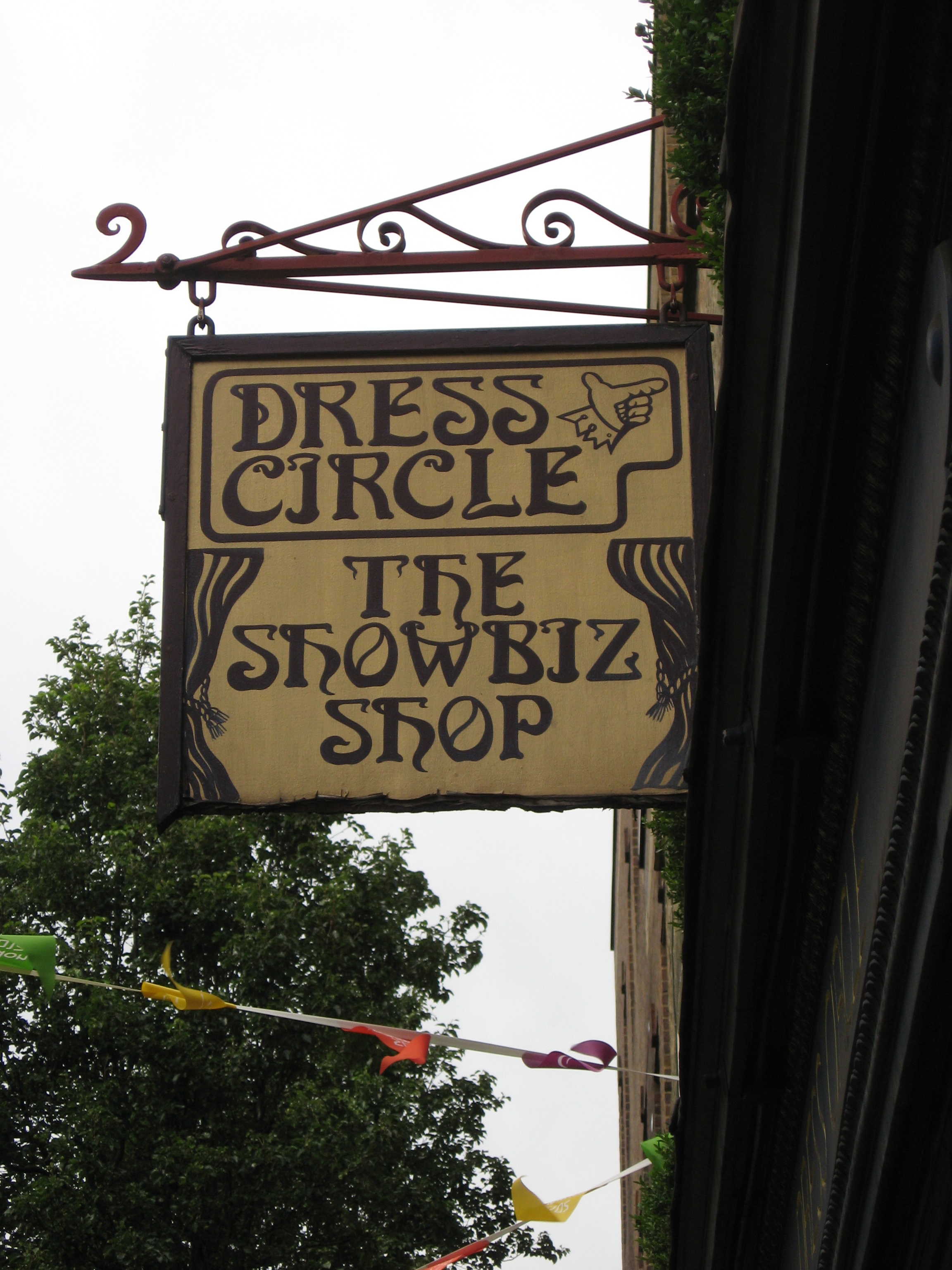
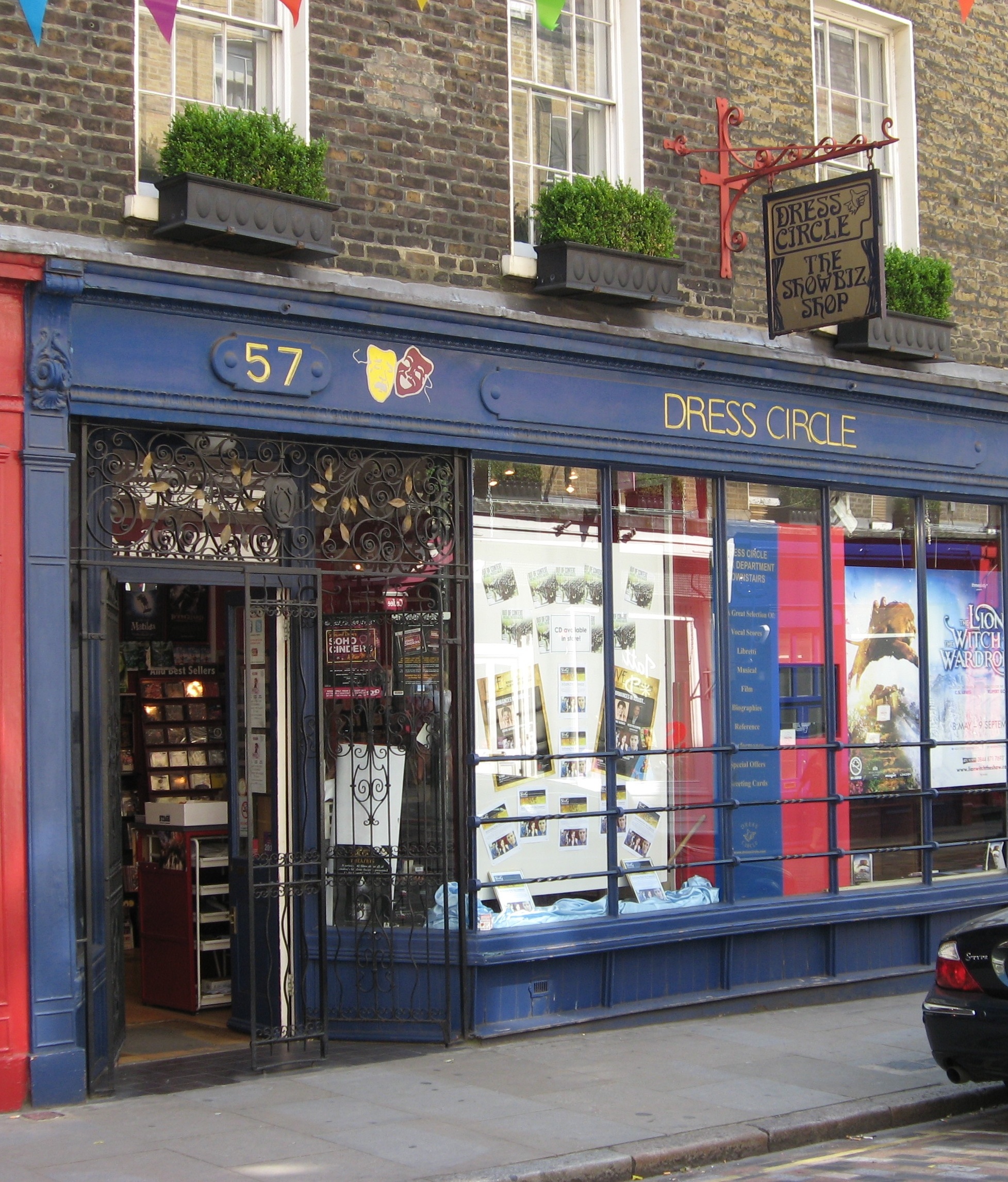
 Dress Circle is a famous musical theatre shop located in London’s Covent Garden and, for many of us, the centre of the musical theatre universe. A small shop with a dark blue front and wrought iron gates, at the top of Monmouth Street, it attracts customers from all over the world. Time and time again, I have seen Dutch, German, Japanese, American and Italian customers walk in with a map indicating the shop, and leave with a basketful of CDs, DVDs and memorabilia. Drama school students sit on the floor against the bright red walls, perusing books of music scores, looking for audition pieces. They walk up to the counter. Chris tells them they can get 10% off with a student Equity card. Did their tutor not tell them? Sometimes, they hum a tune and he comes up with the title, composer and lyricist. Tourists ask to buy a wind up model of the monkey playing the cymbals from The Phantom of the Opera. Hoards of giggly teenage girls raid the shop for anything relating to Wicked. They try on Elphaba’s green sunglasses, buy the silver witch hat pendant, and ask if the West End show poster can be rolled up. Thrilled customers put DVDs on the counter, ready to pay. They have been looking for this film for years. “Have you got a multi-region player?” asks Michael. “This is Region 1.” Many musicals on DVD are imported from the US. Dress Circle trained me well – I now buy only multi-region DVD players. I also learnt how to open a new CD by running a biro point along the side, slashing the film wrapping easily.
Stephen Sondheim, I am told, has been in to buy CDs. So have other famous artists from the world of musical theatre. Before curtain time, West End performers rush in – their stage make up already on – to buy CDs and get an update on showbiz gossip. When asked how the opening night of a major show had gone, a minor role actress is said to have replied, “Honey, I was wonderful!” A Broadway star reportedly had to be taken down a peg by the musical director of the show, for acting like a prima donna. As an agent, I often relied on Dress Circle for advance information on which musicals were casting, not waiting for the official breakdown, which Broadway musicals were transferring and, of course, which shows were worth seeing.
“It’s two and half hours long, darling, but it feels like five.”
“Marvellous.”
“It made me lose the will to live.”
“Oh, darling, I wish I could see it twice.”
Anything you want to know about past, present or future musical theatre, the Witches of Monmouth Street hold the answer. They live and breathe musicals, they know every recording, every version, every artist, every date – whether it is still being sold or deleted, and no matter how obscure. Whatever it is that you want, they will try and get it for you, and if they cannot, then you can rest assured it does not exist. The banter with the customers and among the staff is included in the price of the goods. You can even get a cast recording of The Producers in Hungarian.
I may have drunk my love for musicals with my mother’s milk, but it is Chris and Michael who are my musical theatre godparents, and Dress Circle, the academy where I was trained. As I walk into the shop, Michael turns his candid white head towards me. “Katherine, my dear, how are you?” He purses his lips beneath his snow-white moustache as he kisses the air about four inches away from both my cheeks with a loud, “Mwa!”
Regular customers walk in to say hello, and stand around chatting. Some have frequented the shop for two or three decades, and know each-other’s tales. All have stories to tell me about great stars they have seen in the West End or on Broadway. One tells me of how he stood waiting for Gertrude Lawrence at stage door on a cold, rainy night. When the great lady came out, she graciously apologised for keeping her fan waiting, and thanked him for his patience. Another tells me that I cannot possibly not have heard ‘Cornet Man’ on the Broadway cast recording of Funny Girl. I reply that I’ve only ever seen the film version. He nearly faints from shock, pulls out the CD from his bag, and demands that the shop play it for me on the spot. Barbra Streisand’s youthful voice rings through the shop, plucking at every musical string in your body. I am transported, and ask to buy a copy of the CD.
Early on a Saturday morning, I sometimes bump into another regular, who bows before me. “And how is Katherine the Great, today?”
I curtsey on cue.
Someone standing and smoking by the door says, “His Majesty – three o’clock.”
We all scramble to the door, and stare as a well-known showbiz personality walks by, and gives us a puzzled glance.
Chris’s sense of humour is caustic, deeply irreverent and always right on the nose. After a girl with a particularly oversized bust leaves the shop, he looks at me. “What can I say, darling?” he comments with a slight London twang, “The children of England will never go hungry.” I can barely breathe for laughing. A pearly grin spreads across his tanned face, and his eyes sparkle with mischief behind his glasses. I feel like giving his jet black cowlick a tug. It is Chris who introduced me to the cartoons of Al Hirschfeld. I bought the collection of English cartoons, British Aisles as my Christmas present.
Richard, downstairs, is the one whose job is to find the unfindable CD or DVD. He watches the humour histrionics of the shop floor with an air of acceptance and imperturbable calm. Andrew will listen to your comments about the latest show – or anything else, for that matter – with a twinkle in his eye. Few people know that he possesses a superlative singing voice. His rendition of Lerner and Loewe’s ‘If ever I would leave you’ is a rare treat. John’s tone and expression are long suffering to the novice’s eye, but conceal a wicked sense of humour. Even when he does not utter it, you can see the joke dance in his eyes.
As I write this, I glance at the top shelf of my CD case, dedicated to musicals, most of which are original cast recordings, most of which I bought from Dress Circle; and most of which represent episodes of my theatrical career. City of Angels and Grand Hotel – both shows I saw at the Royal Academy of Music end of year shows, and which featured young performers who caught my eye and whom I signed up when I was a theatrical agent. Both have become friends. The London cast recording of The Sound of Music – another show with another young client – and now, friend. Do I Hear a Waltz? – The first show I went to see in my role as a theatrical agent. On the Twentieth Century – a show I once reviewed after I was told, “What do you mean you don’t know it?!”
It is a symptom of the current absurd decline of many things charming, unique and with a heart, that Dress Circle closed down* last Wednesday, 15th August, after thirty-three years. So many independent shops are being crushed by the obscene rise in London rents or the growth of internet shopping, or because they are unable to compete against the wave of faceless chain coffee shops, chain restaurants, chain clothes shops and other chains. Another pearl, crushed. London, so famous for its quirkiness and inclusiveness, is now increasingly suffocating the individuality of small, independent shops. They are often unable to remain afloat in an ocean stirred by the power of the Pound Sterling.
I have no idea who or what will eventually open behind the listed wrought iron gates. I just know that I will not be walking down Monmouth Street for a while.
Last Wednesday, many loyal customers paid a final visit to the shop that was a cradle of musical theatre knowledge. I went, too. Everybody was trying to be cheerful. The cast recording of the London production of Singing in the Rain bounced off the red walls, carefree and upbeat, strangely at odds with the depleted shelves. You could hear “Change is good”, “I’m sure you’ll be fine” and other platitudes to stop yourself from bursting into tears. There were many cards displayed on the glass cabinets. People expressed their sorrow, and wished everyone the best of luck. Some brought wine. Others, chocolates.
This piece is my gift to Dress Circle.
* Dress Circle will continue to trade online. For more information, please visit their website.
Scribe Doll