
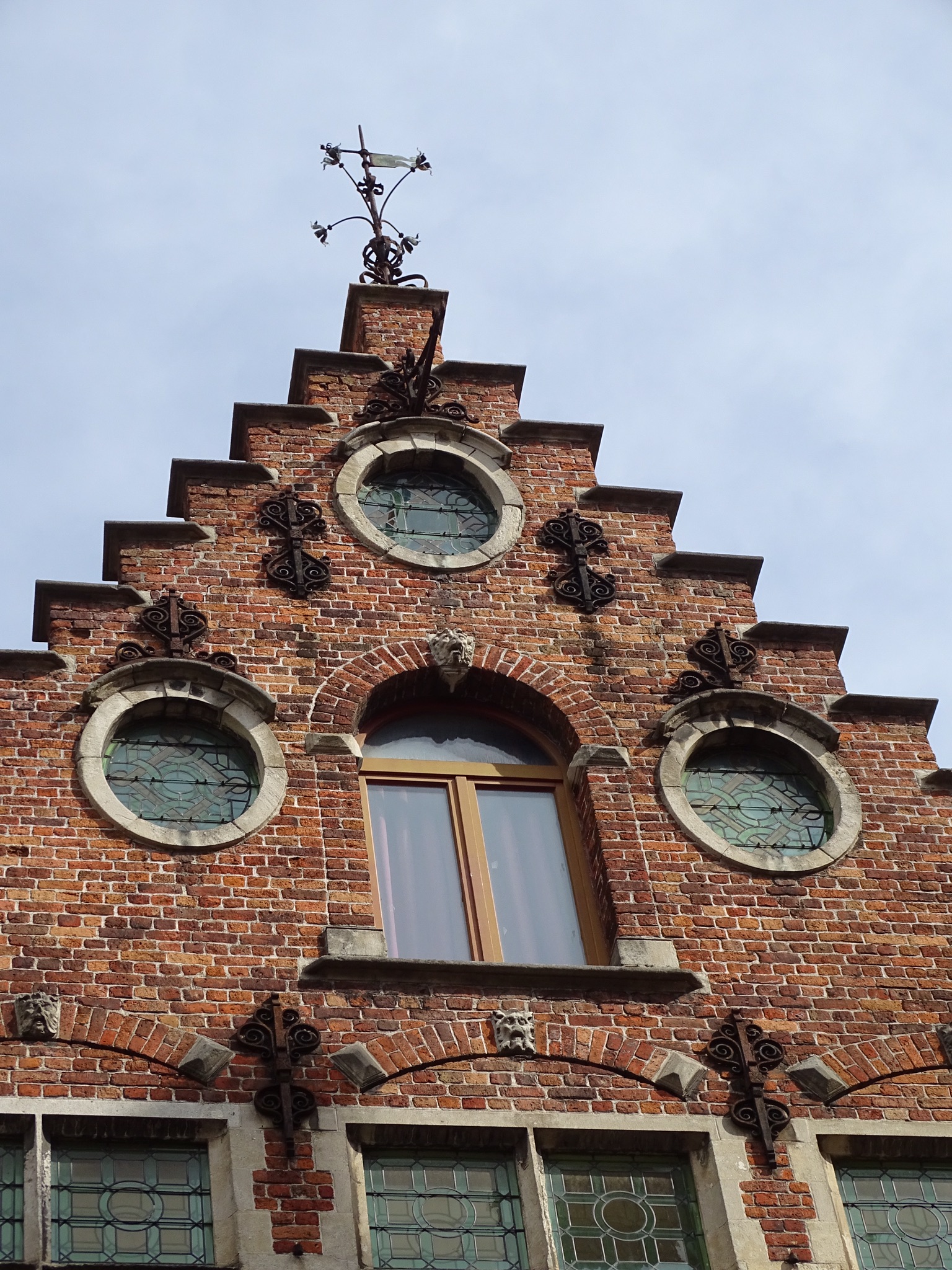
Brugge. That’s what I want to call it from now on.
It’s in Flanders, not Wallonia.
How typical of the Anglophones – the British in particular – to use its French name by default. We haven’t grown out of automatic Gallicisms when referring to things European. If you order a board of “Continental” cheeses in a restaurant, you’re usually served Camembert, Brie, Roquefort; not Manchego, Fontina or Feta. And so, on Anglophone lips, Brugge becomes Bruges.
Brugge. With a softly rolled r and a very light kh, like a sigh, between two delicate vowels, not as limp as a schwa, not as long as a French eu. The double g is almost like an h, a breath, the lady in the gift shop told me this morning. “Not with a hard guttural sound the way the Dutch say it. Flemish is much softer.”
The second dig at the Dutch I’ve heard in two days.
We don’t say Kiev or Peking anymore. Flanders is no longer under Francophone dominion. Let’s say Brugge. Brugge. A sound as fine as the bobbin lace made here for centuries. As light as gossamer.
Brugge. From a word that means bridge.
Scribe Doll
Discover more from Scribe Doll
Subscribe to get the latest posts sent to your email.
 Scribe Doll
I’m sorry, I’ve only just had a chance to reads your fascinating interview with Marian Schwartz and your review of ‘Brisbane’. Truly interesting. Thank you for sending me the link.
Agreed
You may enjoy Brisbane, a novel, which includes differences in pronunciation between Ukrainian and Russian. I interviewed the translator about how she translated the book. https://suestrifles.wordpress.com/2022/07/21/brisbane-a-novel-by-eugene-vodolazkin-translated-by-marian-schwartz/