Miserere mei, Deus: secundum magnam misericordiam tuam.
Et secundum multitudinem miserationum tuarum, dele iniquitatem meam.
Amplius lava me ab iniquitate mea: et a peccato meo munda me.
The voices gently rise to the stone vaults and fill the 12th-century church, one of London’s oldest. The congregation forms a queue. Slowly, everybody advances towards the altar steps.
Quoniam iniquitatem meam ego cognosco: et peccatum meum contra me est semper.
Tibi soli peccavi, et malum coram te feci: ut justificeris in sermonibus tuis, et vincas cum judicaris.
Ecce enim in iniquitatibus conceptus sum: et in peccatis concepit me mater mea.
Ecce enim veritatem dilexisti: incerta et occulta sapientiae tuae manifestasti mihi.
The rector’s expression is stern, menacing almost. I think I am supposed to look down in humility. Instead, I stare straight into his eyes, searching for an echo to my thought. “Remember that thou art dust, and to dust thou shalt return,” he says as his thumb traces a black cross of ash on my forehead.
I am thinking of the phoenix. Of what happens after the return to dust.
Asperges me hysopo, et mundabor: lavabis me, et super nivem dealbabor.
Auditui meo dabis gaudium et laetitiam: et exsultabunt ossa humiliata.
Averte faciem tuam a peccatis meis: et omnes iniquitates meas dele.
Cor mundum crea in me, Deus: et spiritum rectum innova in visceribus meis.
Ne proiicias me a facie tua: et spiritum sanctum tuum ne auferas a me.
The soprano pierces through the semi-darkness, and lingers high up before fluttering downwards, graceful, having made her plea for us all.
I return to the wooden pew, kneel, close my eyes and breathe in the frankincense. Yesterday, Shrove Tuesday, I ate pancakes. I realise that I haven’t decided on what I will give up for Lent. I remember those friends who will probably give up chocolate, or alcohol, or both. Not eating chocolate is easy for me, and, since I hardly drink, renouncing alcohol would hardly constitute a sacrifice. Now cheese, on the other hand… Could I manage a whole forty days without cheese?
The futility of my thoughts suddenly makes me sad.
Redde mihi laetitiam salutaris tui: et spiritu principali confirma me.
Docebo iniquos vias tuas: et impii ad te convertentur.
Libera me de sanguinibus, Deus, Deus salutis meae: et exsultabit lingua mea justitiam tuam.
Domine, labia mea aperies: et os meum annuntiabit laudem tuam.
What’s the point of giving something up that you know you will go back to on Easter Sunday? Doesn’t knowing a privation is temporary make it too easy? Easy and pointless? Isn’t the true purpose of Lent to cleanse your soul for Easter? Will my soul really be purer without cheese or olives or whatever other anodyne habit I decide to break?
For Lent, why don’t we give up something less tangible and yet destructive to us and to others? Something we would work on eradicating from our minds and washing from our souls?
Quoniam si voluisses sacrificium, dedissem utique: holocaustis non delectaberis.
Sacrificium Deo spiritus contribulatus: cor contritum, et humiliatum, Deus, non despicies.
Benigne fac, Domine, in bona voluntate tua Sion: ut aedificentur muri Ierusalem.
Tunc acceptabis sacrificium justitiae, oblationes, et holocausta: tunc imponent super altare tuum vitulos.
How about we pledge to give up resentment?
We could train ourselves, little by little, to replace resentment with responsibility and forgiveness. Turn the other cheek. No, not to ask for another slap, but to remove whoever has struck us from our field of vision, from our thoughts, from our world. To set ourselves free.
When someone upsets us, we could indulge in making up a story about something that just might have happened to this person that would explain his or her unpleasant attitude. It doesn’t have to be true, only plausible. And the self-storytelling might make us feel better.
How about we give up gossiping?
We could try never speaking of a third person except to praise at least one aspect of him or her. Is there nothing good to say about him or her? There must be something, however small. We could avoid divulging personal information about others. Instead of using what we know about them as social currency, we could cherish it as a secret treasure.
How about giving up sadness?
We could choose an image, a tune or a thought that makes us smile and summon it whenever we feel the clouds gathering in our minds.
How about giving up fear?
We could try to imagine that we are safe. Just making believe at first, until it becomes reality. After all, we can’t make it real if we don’t imagine it first. And if we can imagine it, then perhaps we can create it.
Quoniam si voluisses sacrificium, dedissem utique: holocaustis non delectaberis.
Sacrificium Deo spiritus contribulatus: cor contritum, et humiliatum, Deus, non despicies.
Benigne fac, Domine, in bona voluntate tua Sion: ut aedificentur muri Ierusalem.
Tunc acceptabis sacrificium justitiae, oblationes, et holocausta: tunc imponent super altare tuum vitulos.
How about we monitor the words that leave our lips and give up using them irresponsibly?
We could replace “Filthy weather, today” with the more accurate “It’s cold” or “It’s very wet” or “It’s very grey”.
When someone asks us how we are, we could discard “Not too bad” in favour of “Very well, thank you”. It may not be true at the time, but people mostly don’t ask because they really want to know. And “well” might make us feel better.
How about we give up believing we can’t and, at least for a while, try to imagine we can?
How about we give up the familiar comfort of darkness? There is a lot of darkness, I know.
Just one candle. It’s surprising how much light just one little flame gives.
ScribeDoll
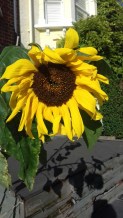 Its unadulterated joy. Its sunshine. For me, joy is most definitely yellow. Not lemony, with a green undertone. Not a darker shade with a injection of mustard. Not the distinguished, pale, almost ivory variety. But brilliant, sunny, golden and unashamedly direct. Like a smile. Not a glamorous, camera-friendly smile but a grin that takes over every muscle in a face, and doesn’t give a damn about how the light falls on it, totally un-self-conscious, unbridled, full of teeth, wrinkles and dimples. Like the glowing petals of sun-worshipping sunflowers in a Tuscan field. Like the spring-heralding daffodils on a Cambridge College lawn.
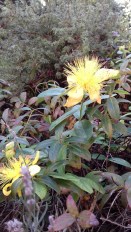 I find brown grounding and comforting. Green makes me feel elegant. Red is for when I’m not afraid to be noticed. Grey is for slouching over my translations. Blue is for calm, orange for inspiration. And yellow is for rejuvenation, regeneration, for courage, for success. For happiness like a cloudless, sunny sky. For warmth, for strength, for courage.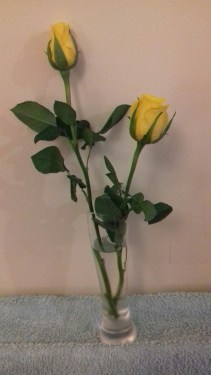

 It had been a while since I’d had a space I could arrange to please myself and myself alone. As I stood in the room, surrounded by towers of unopened boxes, I tried to picture it the way I wanted it, constantly reminding myself that it was going to be my room, my space. I could have it look and feel the way I wanted it. I didn’t have to compromise, to ask anyone else if they minded this print or this plant or the furniture arranged this or that way.



 Scribe Doll